
Meeting The Orang Asli Communities Of Malaysia
Malaysia has one of the most layered cultural histories in Southeast Asia. Malay, Chinese and Indian traditions all contribute to the food, festivals and daily life that travellers encounter from the moment they arrive. But the peninsula's human history reaches back much further than any of these communities, to a people whose presence in this land predates recorded history by tens of thousands of years.
The Orang Asli are the indigenous peoples of Peninsular Malaysia. Spread across 18 distinct groups, they remain closely connected to the forests, rivers and highlands that have sustained their communities for generations. For travellers with a genuine interest in Malaysia beyond its well-known cities and coastlines, spending time with Orang Asli communities offers something rare and worth understanding.
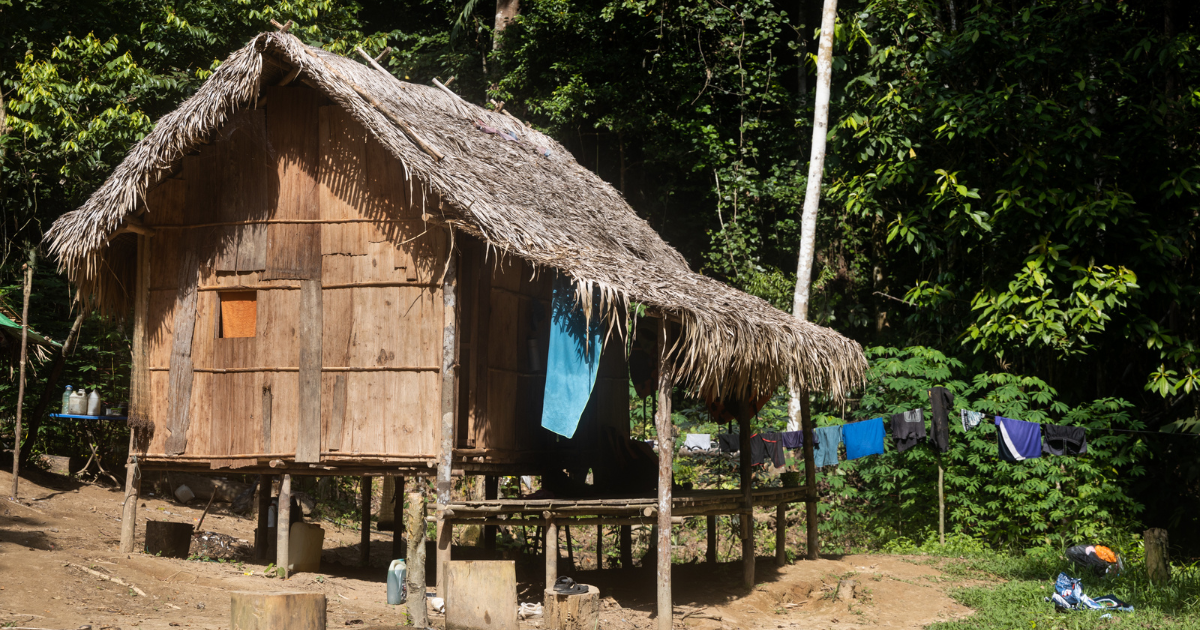
Most Orang Asli communities are found in or near the forested interior of Peninsular Malaysia.
Who are the Orang Asli?
The term Orang Asli translates from Malay as "original people," and it refers collectively to the indigenous peoples of Peninsular Malaysia. There are 18 officially recognised subgroups, each with its own language, customs and territorial ties. They are broadly classified into three main categories: the Semang (also called Negrito), the Senoi, and the Proto-Malay. Of these, the Senoi are the largest group, making up around 54% of the total Orang Asli population.
As of 2025, there are approximately 228,000 Orang Asli living across Peninsular Malaysia. Though they represent less than 1% of the peninsula's population, their significance to Malaysia's cultural and natural heritage is immense. Archaeological and genetic research traces the Semang back 50,000 to 60,000 years, making them among the earliest modern human populations to have settled anywhere in Southeast Asia.
Why are the Orang Asli called the original people?
The name itself carries real meaning. "Orang" means "people" and "asli" derives from the Arabic word for "original" or "first." The term came into official use in the early 1960s, replacing a number of older labels that colonial administrators and neighbouring communities had applied over the centuries. Before that, many groups simply identified themselves by their local area or by a word in their own language meaning "human being."
The Orang Asli were here long before the Malay, Chinese and Indian communities that now make up the majority of the peninsula's population. Their connection to this land is ancestral, stretching back to some of the earliest human migrations into Southeast Asia. It is a remarkable continuity, and one that gives even a brief encounter with Orang Asli communities a sense of real historical depth.
Where do Orang Asli communities live in Malaysia?
Orang Asli communities are found across all 11 states of Peninsular Malaysia, though most are concentrated in the forested and highland interior rather than the coastal cities. The Semang groups live mainly in the northern states of Perak, Kelantan and Pahang. Senoi communities are spread through the central highlands, including the slopes of the Titiwangsa range and into Cameron Highlands. The Proto-Malay groups are found further south, along the Strait of Malacca coast and in the forests of Johor.
There are roughly 869 Orang Asli villages across the peninsula, many of them in or near forested areas. For travellers, the communities most likely to be encountered are the Batek in and around Taman Negara, the Semai in the Cameron Highlands, and the Temuan in Hulu Selangor, about an hour's drive from Kuala Lumpur. Each of these areas has a different Orang Asli group, which is worth keeping in mind when planning a visit.
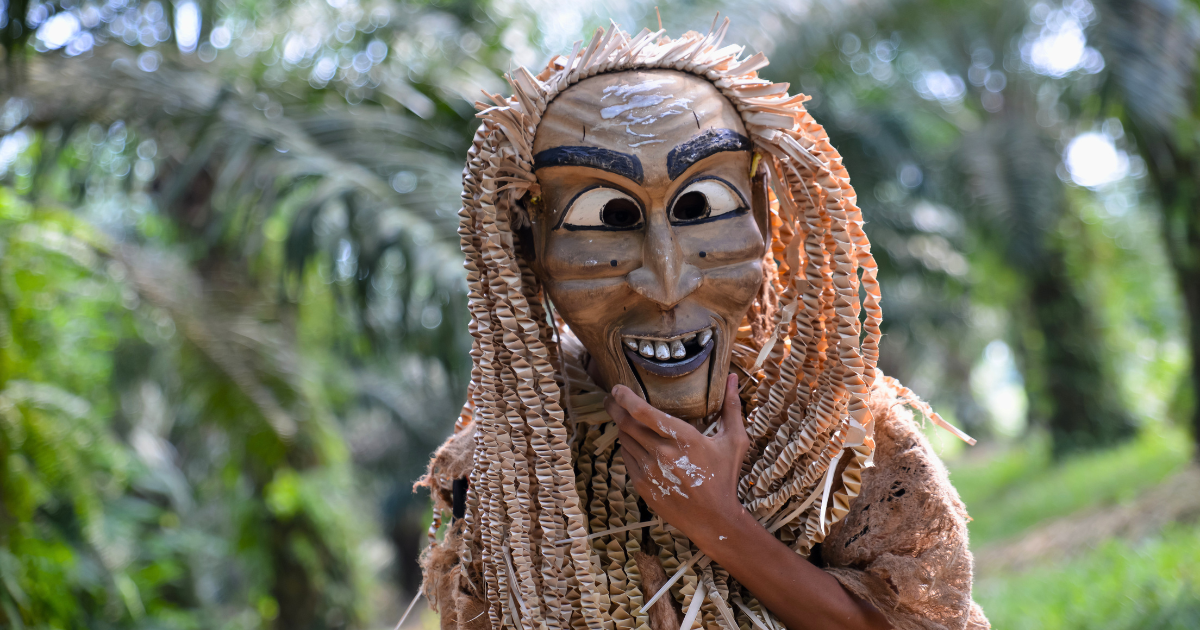
Spirit figures play a role in the animist traditions maintained by several Orang Asli groups.
What is Orang Asli culture like?
There is no single Orang Asli culture because each of the 18 subgroups has developed its own traditions, social structures and ways of living, all closely tied to the environment they have called home for centuries. A Batek community in the lowland rainforest of Taman Negara lives quite differently from a Mah Meri community near the coast of Selangor, for example. What connects them is a deep relationship with the natural world, and a tradition of passing knowledge from one generation to the next through memory, practice and spoken word.
Language, oral tradition and community identity
The Orang Asli speak a wide range of languages, most belonging to the Aslian branch of the Mon-Khmer language family, and several groups also speak Malay. None of these languages have a traditional written script, so stories, medicinal knowledge and customary law are all preserved through conversation, repetition and lived experience. Elders play a particularly valued role in this process, holding the collective memory of their community.
Each group also carries its own identity markers, from the names they use for themselves to the customs that guide marriage, leadership and land use. The Temuan of Hulu Selangor, for instance, have lineage and village leadership structures quite distinct from those of the Temiar further north. Recognising that diversity is an important part of appreciating Orang Asli culture, and of understanding the communities travellers may encounter across the peninsula.
Spiritual beliefs and the role of animism
Among the tribal communities of Malaysia, the Orang Asli maintain some of the oldest continuing spiritual traditions. Most groups hold some form of animist belief, though the specifics vary. The common thread is a view of the natural world as inhabited by spirits, present in rivers, trees, rocks and weather patterns. These beliefs guide decisions about where to hunt, when to farm and how to move through the forest with care.
Shamans, known in some communities as "poyang," serve as a bridge between the human and spirit worlds, with a role that includes healing, leading rituals and guiding the community through important moments in life. Dreams also carry meaning in many Orang Asli groups and are often discussed together, sometimes shaping plans for the day ahead. In recent decades, some Orang Asli have adopted Islam or Christianity, though many continue to hold elements of their traditional beliefs alongside their newer faith.
Traditional skills, crafts and daily life
Orang Asli communities of Malaysia hold a detailed understanding of the plants and animals around them, built up over thousands of years of living closely with the rainforest. Many groups know which species provide food, medicine, building materials or natural dyes, and this expertise continues to be practised and refined rather than simply remembered.
The blowpipe is one of the most widely recognised Orang Asli tools, traditionally used for hunting birds, monkeys and squirrels. It is crafted from bamboo and fitted with darts tipped with plant-derived poison, and among the Batek, carving and owning a blowpipe marks a young man's readiness for adulthood and marriage.
Women in many Malaysian tribal communities are accomplished weavers, using pandanus leaves to create baskets, mats and carrying bags, while the Mah Meri of coastal Selangor are well known for their detailed woodcarvings of spirit figures. Music and dance are also a lively part of community life, with traditions like the Temiar sewang performed for healing, celebration and connection with the world around them.
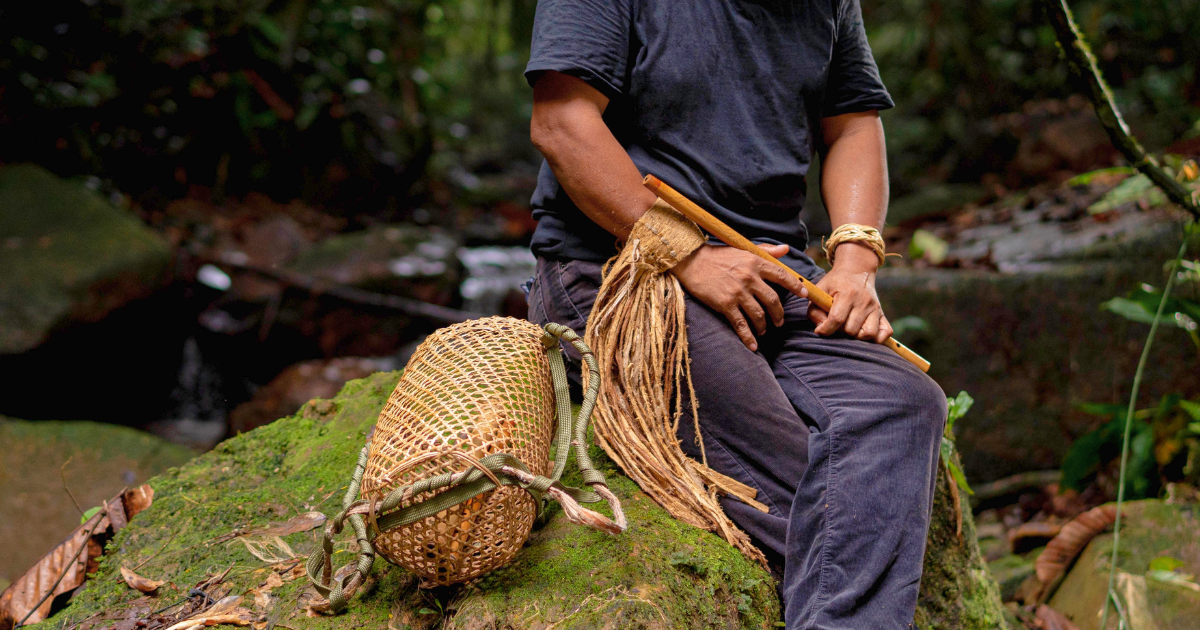
Knowledge of forest materials and traditional craftsmanship is passed between generations.
Can you visit Orang Asli villages as a traveller?
Yes, and the best way to do so is through community-led programmes where the hosts themselves decide what visitors see and learn. A small number of communities across Peninsular Malaysia have chosen to welcome travellers in this way, including Batek communities near Taman Negara, Semai villages in Cameron Highlands, and the Temuan in Hulu Selangor near Kuala Lumpur, where a social enterprise called Native co-designs experiences with local hosts and operates on a profit-sharing model.
These visits are quite different from the roadside "village stops" that appear on some group tour itineraries, which often involve large numbers of visitors arriving unannounced with little benefit reaching the people who live there. Looking into how a visit is structured before booking makes a real difference, both to the quality of the experience and to the people offering it.
What should travellers know before visiting an Orang Asli community?
Most Orang Asli villages are in rural or forested areas that take some planning to reach, and the experience is quite different from a typical cultural attraction. A little preparation goes a long way, both in terms of practical comfort and in making sure the visit feels easy and enjoyable for everyone.
Distance, access, and what a village visit involves
Reaching an Orang Asli community usually means travelling beyond the main tourist corridors. Batek villages near Taman Negara are accessed by boat along the Tembeling River, while Semai settlements in Cameron Highlands are reached by 4WD along narrow forest roads. The Temuan community in Hulu Selangor is the most accessible from Kuala Lumpur, at roughly an hour by car. In all cases, visits are arranged through a guide or local operator rather than by turning up independently.
A community-led visit might last a few hours and could include a guided walk through the surrounding forest, a blowpipe demonstration, fire-starting using traditional methods, and food prepared in bamboo over an open flame. There is usually time for conversation with community members through a local guide who can translate, and some communities also offer homestay options for those who would like to stay longer.
Community protocols and local expectations
Orang Asli communities are welcoming places, and visits tend to go smoothly when travellers approach them as guests rather than spectators. Photography is welcome in most programmes, though it is considerate to ask before photographing individuals, particularly women and children. Some community members may be quieter around visitors, and giving them space is always appreciated.
The host or guide will indicate where to walk and how to engage, and following their lead is the easiest way for everyone to feel comfortable. These are family homes and working villages, so the same courtesies that come with any personal invitation apply naturally here.
Respectful interaction during village visits
Listening tends to be more rewarding than asking during an Orang Asli visit. The guides and hosts will share what they are happy to share, and allowing the experience to unfold at their pace often leads to the most honest and memorable conversations. For anything specific, the guide is always the best person to ask, particularly where there is a language difference.
Purchasing handmade crafts such as woven baskets or carved figures directly from community members is one of the most appreciated forms of support. These items carry real skill and cultural meaning, and buying them at the source ensures the income stays within the village.
Thoughtful ways to support Orang Asli communities
Beyond the visit itself, there are a few simple ways to contribute positively. Booking through operators that work in partnership with the community, such as Native in Hulu Selangor, ensures that a fair share of the cost reaches the people who make the experience possible. Talking about the experience afterwards also helps build a wider, more informed appreciation of Orang Asli culture.
For those interested in learning more before or after a visit, the Orang Asli Museum in Gombak, about 25km from central Kuala Lumpur, offers helpful background on the history and diversity of these communities. The Center for Orang Asli Concerns (COAC) also publishes accessible information for anyone interested in the wider story of indigenous Malaysia.
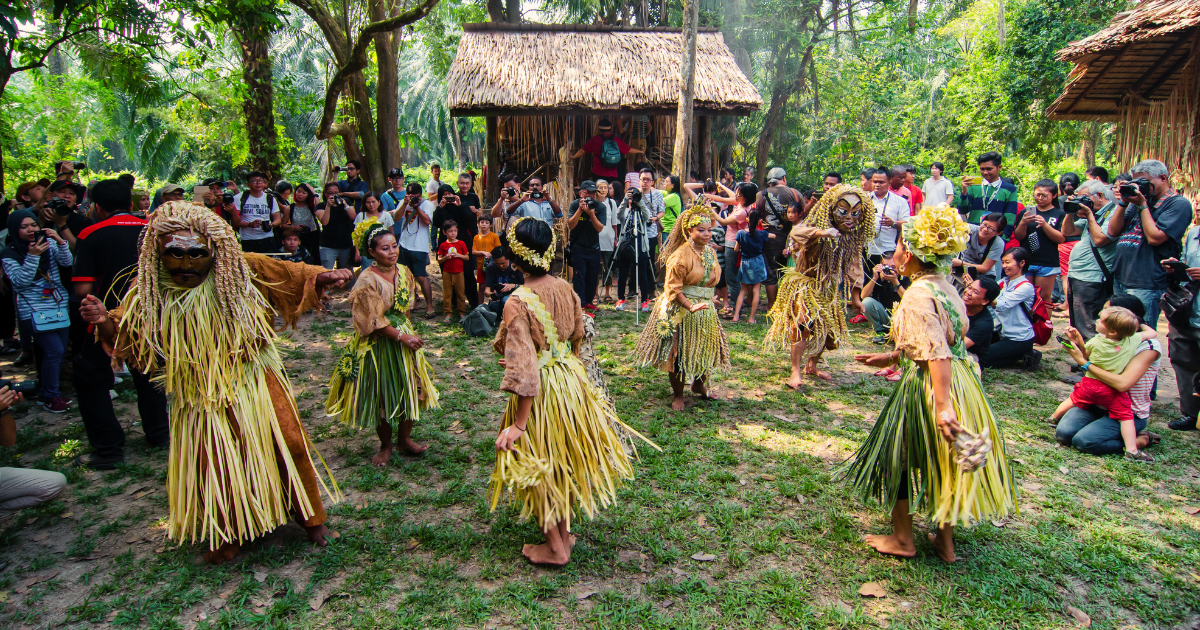
The Mah Meri of coastal Selangor are one of the few Orang Asli groups who regularly share their traditions through public cultural events.
Visiting Orang Asli communities with Asia Unbound
Asia Unbound specialises in thoughtful exploration across the wider Asian region, with a focus on cultural context and destinations that sit outside the usual tourist circuits. A visit to an Orang Asli community fits naturally within that approach, offering the kind of firsthand, locally grounded experience that a standard Malaysia itinerary rarely includes.
Our regional specialists work with endorsed local guides and programmes run by the communities themselves to arrange visits that suit both the traveller and the host community. An Orang Asli experience can be built into a custom-made journey through Malaysia, alongside time in Taman Negara, Cameron Highlands, Royal Belum or any combination that fits. Contact our team to start planning.