
How To Explore Don Khon By Bicycle In Laos
In the far south of Laos, just north of the Cambodian border, the Mekong River widens to nearly 14 kilometres and fractures into a web of channels, sandbars and islands. This is Si Phan Don, which translates literally to "Four Thousand Islands." Most of them are uninhabited slivers of sand and rock, but a handful are home to farming communities, fishing villages and a scattering of guesthouses that draw travellers looking for somewhere unhurried.
Don Khon is one of those islands, and it rewards those who explore it slowly. French colonial ruins from a 19th-century railway, waterfalls where the Mekong drops over rocky cascades, and villages where daily life has changed very little in decades are all reachable within a single day's bicycle ride.
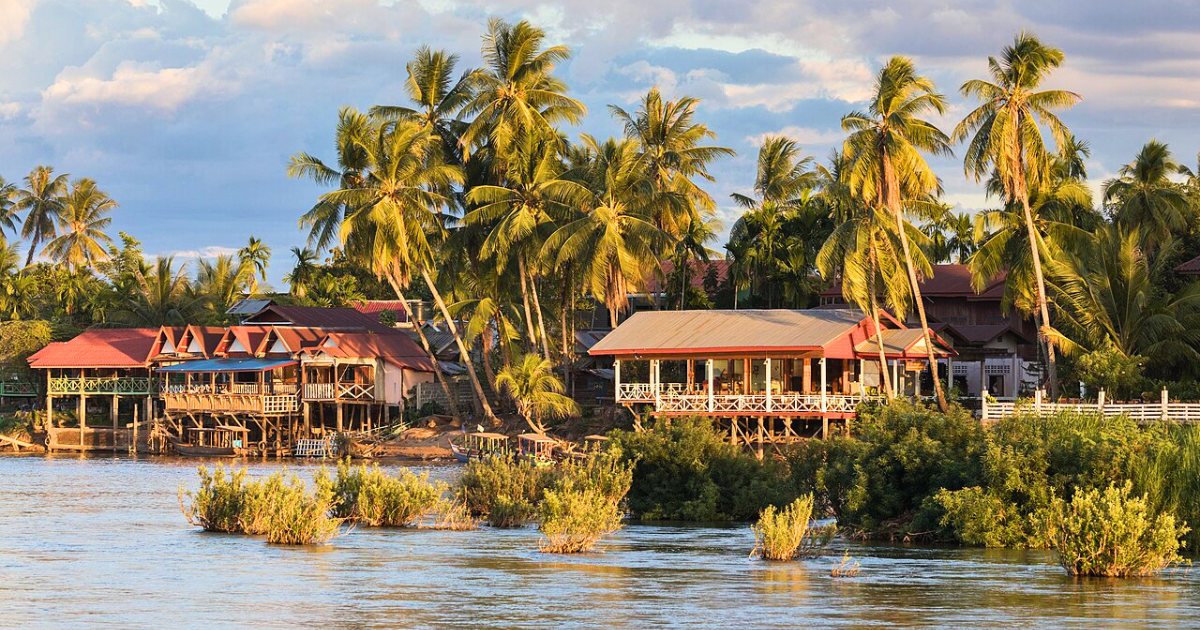
Don Khon sits in the Mekong River within the Si Phan Don archipelago in southern Laos.
Where is Don Khon and why does it matter?
Don Khon island sits in the Mekong River within Champasak Province, the southernmost stretch of Laos. It is part of the Si Phan Don archipelago, a scattering of islands where the Mekong broadens and slows on its way towards Cambodia. The nearest town of any size is Pakse, roughly 130 kilometres to the north, which serves as the main gateway for Si Phan Don travel. From there, a minivan ride to the river port at Nakasang and a short boat crossing bring visitors straight to the island.
Don Khon is small enough to feel immediately familiar. A paved road rings most of it, dirt paths cut through the interior, and the whole island can be covered by bicycle in a few hours. What makes Don Khon worth the effort of getting there is how much sits within that small area.
The old French railway that once moved gunboats and cargo past the Mekong's impassable rapids left behind a concrete bridge and the remnants of a colonial port. Somphamit Falls occupies the western shore, where the river drops over a long series of rocky cascades. And between these landmarks, the island is a working landscape of rice paddies, fishing villages and small temples where the routines of daily life have not shifted much in decades.
Can you cycle on Don Khon?
Cycling is the most natural way to get around Don Khon. The island is flat, the distances are short, and the roads are quiet enough that the main things to watch for are wandering cows and the occasional chicken. There is no traffic to speak of, and the network of paved roads and dirt paths connects every part of the island within easy reach of two wheels. For those interested in cycling in Laos islands, Don Khon is one of the best places to start.
Is Don Khon good for biking?
Yes. The terrain is gentle and the riding is easy. A paved road loops around most of the island, while firm dirt tracks wind through rice paddies and farmland in the interior. There are no hills and no complicated junctions, just open paths with plenty of shade from palm and mango trees along the way. The island's size makes it easy to stop as often as feels right, whether for a cold drink at a riverside spot, a look inside a village temple, or a few quiet minutes watching the Mekong drift past. For anyone drawn to slow travel in Laos, Don Khon on a bicycle is one of the best ways to experience it.
Why is Don Khon car-free?
The absence of cars is a product of geography rather than any formal policy. For most of its history, the only way to reach Don Khon was by boat, and the paths that developed over generations were shaped around foot traffic, bicycles and the occasional motorbike. Even with a bridge now connecting it to neighbouring Don Det, the roads remain narrow and the island's layout suits nothing larger than a tuk-tuk. It is one of those rare places where getting around slowly is not a compromise but the whole point.
What can you see while cycling on Don Khon?
Most of Don Khon's sights sit along a loose route that runs from the French railway bridge in the north down to the old colonial port at the island's southern tip. Riding between them feels less like ticking off a list and more like letting the island unfold at its own pace, with plenty of unexpected stops in between.
The French railway bridge and the old locomotive
The ride begins at the bridge connecting Don Det to Don Khon, a 158-metre concrete structure originally built around 1910 to carry a narrow-gauge railway. The French colonial administration constructed the line to bypass the Mekong's impassable rapids and waterfalls, allowing cargo, passengers and even gunboats to be transported overland between navigable stretches of the river. The railway operated from 1893 until around 1940, and was the only rail line in Laos until 2009.
Just south of the bridge on the Don Khon side, a small shelter houses the island's surviving locomotive, a rusting Orenstein & Koppel engine dating from 1911 and named Eloïse. The old trackbed that once carried the railway now serves as one of the island's main cycling paths, a firm, flat route that runs south through the interior. Riding along it, with the rails long since removed and the ballast compacted into a smooth surface, is one of the more unusual ways to experience colonial history anywhere in Southeast Asia.
Li Phi (Somphamit) falls
About 1.5km from the bridge, a short detour west leads to Li Phi Falls, also known as Somphamit Falls. The name "Li Phi" translates to "spirit trap," reflecting a local belief that the falls catch bad spirits as they wash downstream. This is where a section of the Mekong drops over a long, uneven series of rock shelves, splitting into dozens of channels that churn and tumble through gaps in the stone. The sound of it carries well before the falls come into view.
Entry costs 30,000 kip (around $3 AUD) per person, and a network of well-maintained paths leads to several viewing points along the edge. Nearby, a sandy beach offers a place to swim and cool off after the ride. The falls are at their most impressive during and just after the wet season, when the volume of water is enormous, though they remain a striking sight year-round.
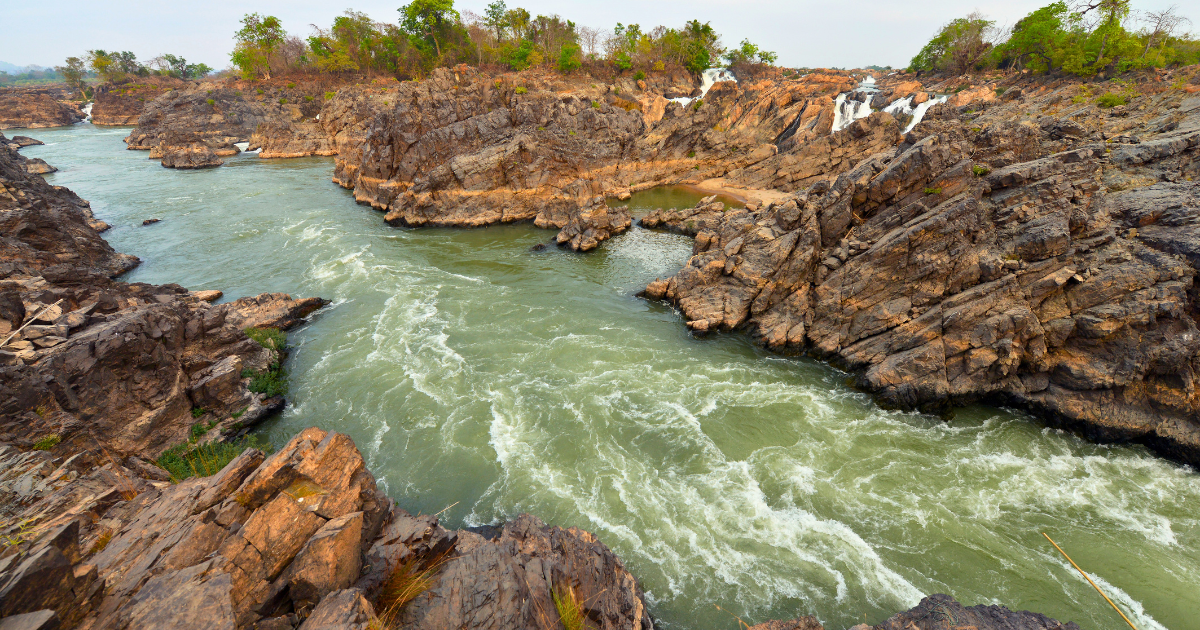
Li Phi Falls during the dry season, where the Mekong cascades through dozens of rocky channels.
The old French port at Ban Hang Khon
Following the old railway alignment south from the bridge leads eventually to Ban Hang Khon, the village at Don Khon's southern tip. This is where the French built a port to transfer goods and passengers between the railway and steamships operating on the lower Mekong. The ruins of the harbour buildings are still visible, and a set of old steps leads down to the water's edge.
The view from here looks directly across the river into Cambodia, close enough that the far bank is clearly visible. A couple of small restaurants at the port offer cold drinks and food with a view over the water, making it a natural place to rest before turning back. The ride from the bridge to the port covers roughly 5.5km along a mostly flat and shaded route.
Village life and rice paddies along the route
Between the main landmarks, much of the pleasure of cycling Don Khon comes from what sits in between. The interior of the island is a working agricultural landscape of rice paddies, vegetable gardens and small homesteads. Chickens, ducks and cattle share the paths with cyclists, and during planting and harvest seasons, the fields are full of families working together.
Several small Buddhist temples are scattered along the route, including Wat Khon Tai near the bridge, which is a simple village temple that welcomes respectful visitors. The villages themselves are quiet and friendly, and it is common to exchange waves and smiles with locals going about their day. This is the side of Don Khon that does not appear on most itineraries but often ends up being the most memorable part of the ride.
Khon Tai beach and the less-visited south
The southern stretch of Don Khon sees far fewer visitors than the areas around the bridge and the waterfalls, and that is part of its charm. Khon Tai beach is a sandy spot on the river where locals come to swim and where the pace drops even further. The water is calm here, and the shade from the surrounding trees makes it a comfortable place to stop for a while.
Beyond the beach, the southern part of the island is mostly farmland and forest, with narrow paths winding between the trees. Cycling through this stretch feels genuinely off the beaten path, even on an island that is already far removed from the usual tourist circuits. It is a good reminder of why Si Phan Don continues to appeal to travellers looking for something quieter and more grounded.
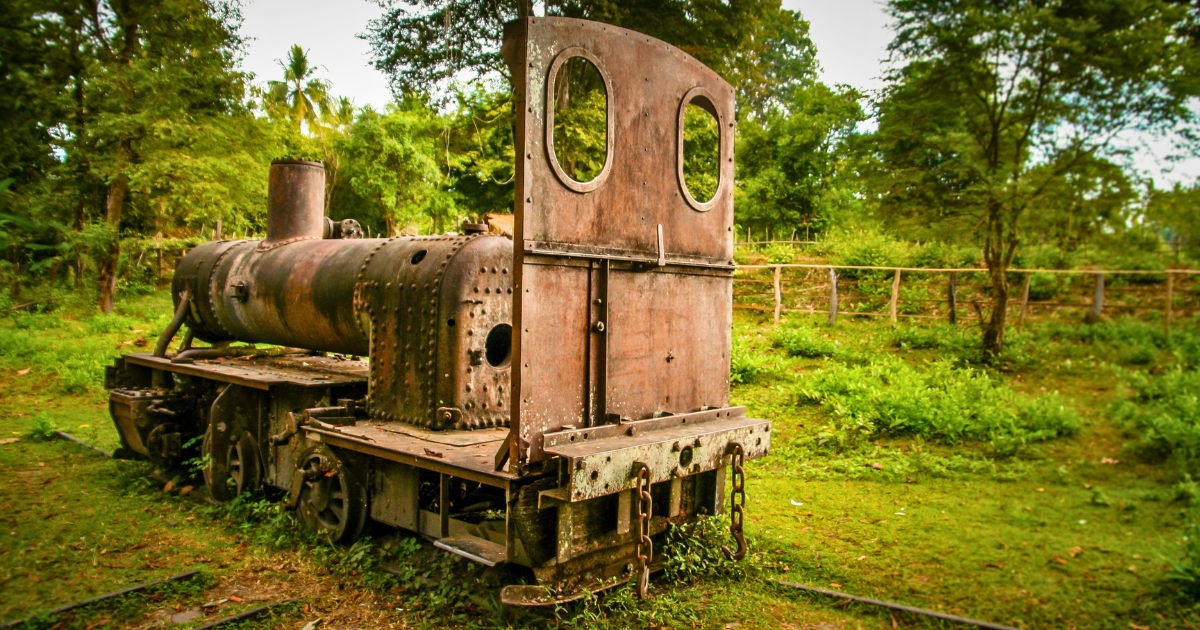
The surviving Orenstein and Koppel locomotive on Don Khon, dating from 1911.
What to know before cycling Don Khon
A little planning goes a long way on Don Khon, though the beauty of cycling here is that very little needs to be complicated. The roads are easy to follow, the island is small enough that losing the way is almost impossible, and everything a visitor needs can be sorted within a few minutes of arriving.
When is the best time of year to cycle Don Khon?
The dry season from November to April is the most pleasant time to ride. Temperatures sit between 25°C and 35°C, the dirt paths are firm underfoot and the skies tend to stay clear for most of the day. November to February is especially good, when the heat is gentler and the morning light across the Mekong is at its finest. The wet season from May to October has its own appeal. The island turns a deep, rich green, the waterfalls run at full force, and the trails are much quieter with fewer visitors around. Some of the dirt tracks can get soft after a downpour, though the paved loop road remains reliable all year round.
Where to rent a bicycle and what to expect
Bicycles are available at most guesthouses on the island and from a handful of small rental spots near the bridge. The going rate is between 10,000 and 20,000 kip per day, which comes to roughly $1 to $2 AUD. The bikes are simple, single-speed models with a basket on the front, which is all the flat terrain calls for. Testing a few before settling on one is a good idea, as the condition varies. A smooth chain and a comfortable seat height make a real difference over a full day of riding.
How long does it take to explore the island?
A steady ride around the main loop of Don Khon covers roughly 20 kilometres, which could be done in a couple of hours without stopping. Most people take a full morning or an entire day, because stopping is half the pleasure. A common approach is to set out early, before the heat builds, and spend the morning riding between the main sights with plenty of pauses along the way. By early afternoon, the shade of a hammock or a riverside restaurant tends to win out, and that is a perfectly good way to round off the day.
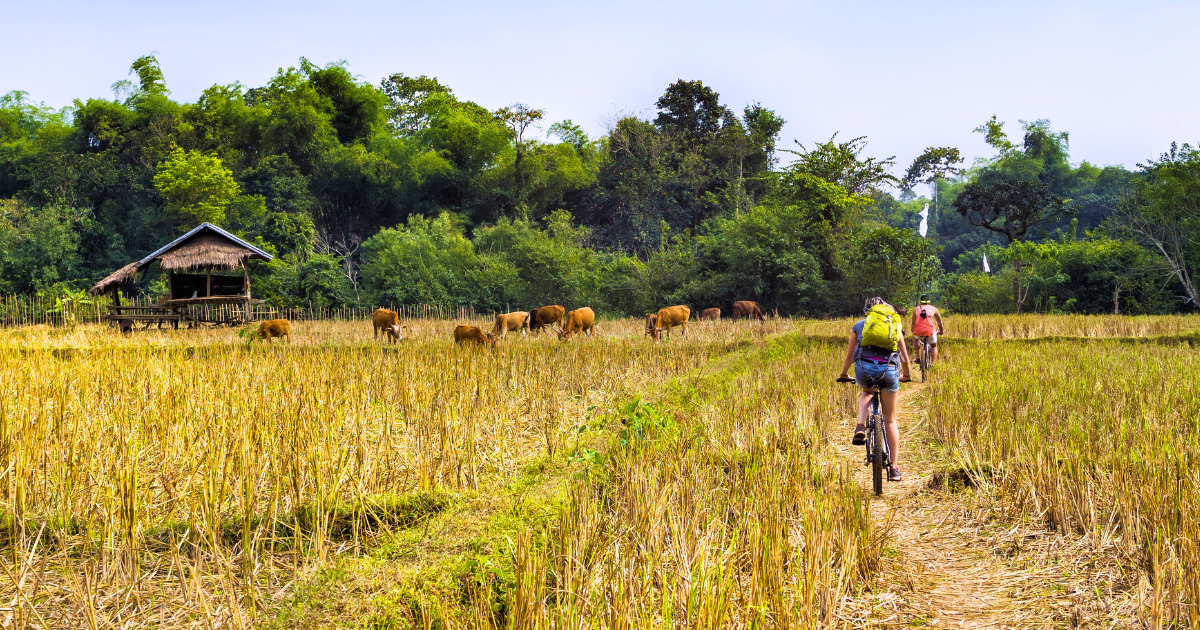
The interior of Don Khon is a working agricultural landscape best explored at cycling pace.
Cycle in Don Khon with Asia Unbound
Asia Unbound builds custom-made journeys through Laos that include experiences like cycling Don Khon alongside the region's wider cultural and natural highlights. Itineraries are shaped around each traveller's interests and pace, with expert local guides, carefully chosen accommodation and the flexibility to spend longer wherever it feels right. To start planning a private journey through Laos, get in touch with our team.