
What To Know Before Visiting Malaysia For The First Time
Malaysia sits at the centre of Southeast Asia, sharing a land border with Thailand to the north, separated from Singapore by a narrow strait to the south, and stretching east across the South China Sea to occupy the northern third of Borneo. The country is divided into two distinct land masses, Peninsular Malaysia and East Malaysia, with very different geography and communities across the two. Malay, Chinese, Indian and Indigenous communities have influenced the country's food, architecture, religion and language over centuries.
For many travellers heading to Southeast Asia for the first time, Malaysia tends to be quieter on the radar than Thailand, Vietnam or Indonesia and that tends to be a missed opportunity. The country is one of the easier places to travel in the region, with widely spoken English, reliable infrastructure, a strong domestic flight network and a range of cultural and natural experiences that is difficult to match in a single trip. A week in Kuala Lumpur and Penang covers very different ground from a week in Sabah or Sarawak, and most first time visitors underestimate how much sits between the two.
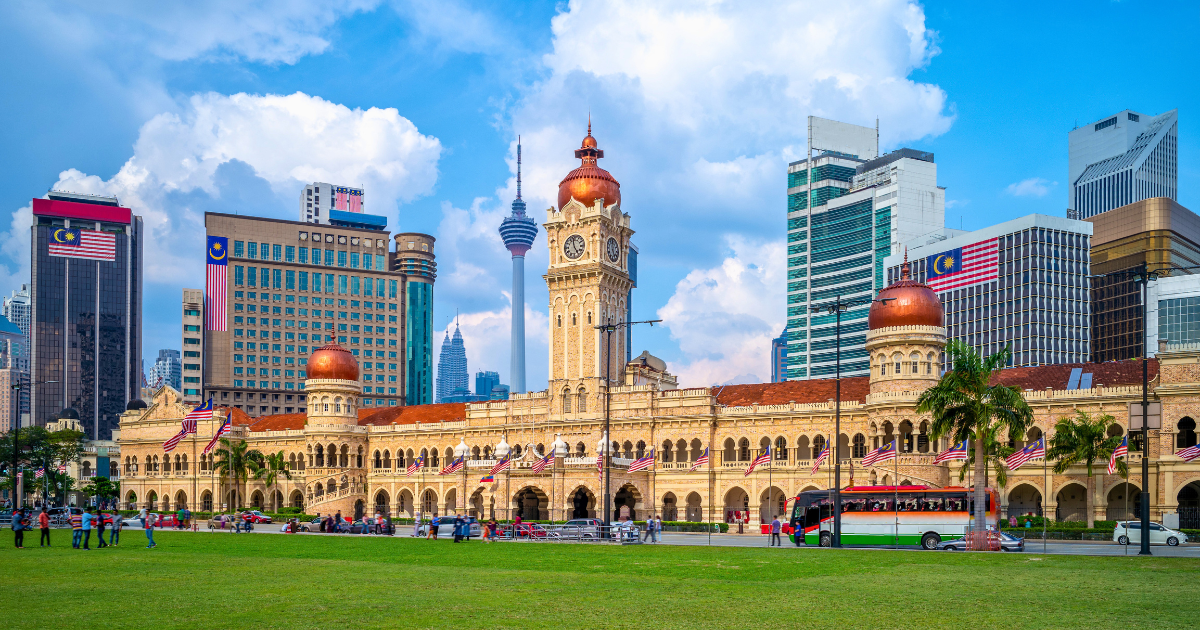
Kuala Lumpur is where most first visits to Malaysia begin. The colonial centre around Merdeka Square is where the country declared independence from British rule in 1957.
Understanding Malaysia's geography and regions
Malaysia covers around 330,000 square kilometres of land, split into two parts separated by about 600 kilometres of the South China Sea. The country is made up of thirteen states and three federal territories, with eleven of those states on the peninsula and two, Sabah and Sarawak, on the island of Borneo. Most travel between the two halves is done by plane, with regular flights from Kuala Lumpur to Kota Kinabalu and Kuching taking between two and two and a half hours.
The two regions are quite different on the ground. The peninsula is more developed and urbanised, holding most of the country's major cities. Borneo is mountainous and heavily forested, with a much smaller population and a slower pace of travel.
Peninsular Malaysia
Peninsular Malaysia runs around 800 kilometres south from the Thai border to the southern tip near Singapore. A central mountain range, the Titiwangsa, runs down the spine of the peninsula and divides it into two coasts. The west coast, facing the Strait of Malacca, holds the majority of the population and most of the country's cities, including Kuala Lumpur, George Town and Melaka. The east coast, facing the South China Sea, is quieter, more traditionally Malay in character, and known for its islands and beaches.
Around 80 percent of Malaysia's population lives on the peninsula. The west coast has historically been the centre of trade, drawing Chinese and Indian communities over generations, while the east coast remains more rural and culturally conservative. Cameron Highlands sits in the interior at around 1500 metres above sea level, and was developed as a hill station during British colonial rule to offer relief from the lowland heat.
Sabah and Sarawak in Malaysian Borneo
Sabah and Sarawak together make up around 60 percent of Malaysia's total land area but hold only about 20 percent of the population. The two states share the island of Borneo with Indonesian Kalimantan to the south and the small Sultanate of Brunei to the north. The terrain consists largely of rainforest, river systems and mountain ranges, including Mount Kinabalu in Sabah, which at just over 4000 metres is the highest point in Southeast Asia.
The cultural composition here is different from the peninsula. Indigenous communities including the Iban, Bidayuh, Kadazan-Dusun, Murut and many smaller groups make up a significant portion of the population, and longhouse communities remain part of life in parts of Sarawak. Both states have their own immigration controls separate from the federal system, which means travellers crossing from the peninsula receive a separate entry stamp on arrival.
Is Malaysia good for first time visitors?
For a first visit to Southeast Asia, Malaysia is one of the more approachable countries in the region. English is widely understood in cities and tourist areas, signage at airports and major sites is bilingual, and most hotel, restaurant and transport staff are comfortable in English. The roads are well maintained and the trains running between Kuala Lumpur, Ipoh, Butterworth and Singapore keep to a reliable schedule.
Culturally, the country gives visitors an accessible introduction to the region. Malay, Chinese and Indian communities have lived alongside each other in cities like Penang and Melaka for generations, and it is common to find mosques, Chinese temples and Hindu shrines within a short walk of one another. Travellers come away with a clear sense of Southeast Asia's cultural composition without the intensity of arriving somewhere busier or less navigable on a first trip. For travellers new to the region, a private tour of Malaysia is one of the more straightforward ways to cover both the cities and Borneo without losing time to logistics.
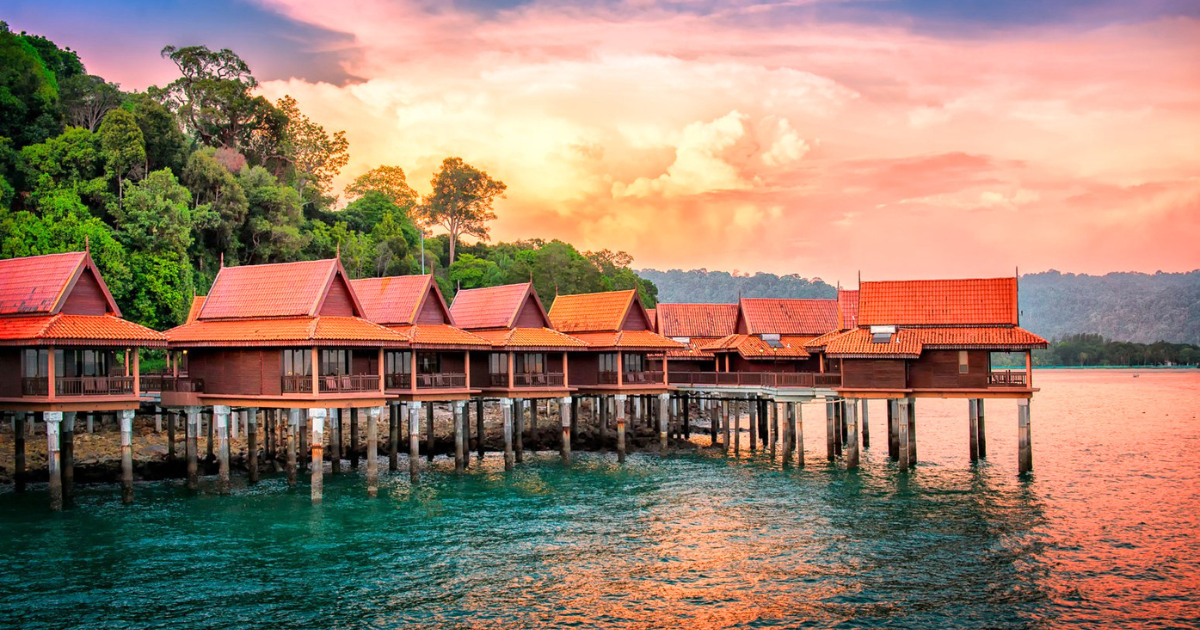
The east coast of the peninsula and the waters around Borneo hold most of Malaysia's island destinations, each reached by short flight or ferry from the mainland.
When is the best time to visit Malaysia?
The best time to visit Malaysia depends on the region. December to February is the most settled period for the west coast of Peninsular Malaysia, May to September is best for the east coast islands, and March to October is the drier window for Borneo. Temperatures across the country stay warm and humid year-round, generally between 26 and 32 degrees, with two monsoon systems driving the regional differences.
The west coast of Peninsular Malaysia
The west coast, covering Kuala Lumpur, Penang, Melaka and the route up to Cameron Highlands, receives the southwest monsoon between April and September. This brings short afternoon downpours rather than long periods of rain, so travel remains possible throughout the year. December to February is generally the most settled window, with lower humidity and clearer skies, and is the busiest period for international visitors.
The east coast and islands
The east coast of the peninsula sees a stronger monsoon between November and March, which makes the area less suitable for beach travel during those months. The islands of Tioman, Redang and the Perhentians operate seasonally, with most resorts open between May and September. Outside this window seas are rough and many resorts close completely, so a first trip that includes the east coast islands should be timed accordingly.
Sabah and Sarawak in Borneo
Borneo follows a slightly different pattern, with the drier months running from March to October. This is the more reliable window for wildlife viewing, when river levels are manageable and orangutan and proboscis monkey activity is easier to observe. Travel through Sabah and Sarawak remains possible during the wetter months, though some river routes and more remote areas become harder to reach.
Where to go in Malaysia on a first visit?
Most Malaysia travel guides cover the same core route, beginning with Kuala Lumpur, George Town in Penang and Melaka on the west coast of the peninsula and adding further destinations depending on interest. Cameron Highlands offers cooler air and tea country, Borneo brings rainforest and wildlife, and the east coast islands suit travellers who want beach time. The peninsula's west coast is the easiest core to build around, with Borneo or the islands added when there is time for a flight and a few extra days.
Kuala Lumpur
Kuala Lumpur is where most first visits begin, partly because the city is the country's main international gateway and partly because it gives a useful introduction to the cultural composition of Malaysia. The skyline around the Petronas Towers and KLCC sits alongside older neighbourhoods like Chinatown, Little India in Brickfields and the colonial core around Merdeka Square. Two to three days is usually enough to take in the main areas, sample the food and visit Batu Caves on the city's northern edge.
George Town, Penang
George Town, the capital of Penang, is one of Southeast Asia's most intact heritage cities and has been listed as a UNESCO World Heritage site since 2008. The historic core is walkable and made up of Chinese shophouses, Peranakan mansions, mosques, clan houses and temples built during George Town's long history as a trading port. Penang is also one of the country's strongest food destinations, with char kway tew, assam laksa and Hokkien mee among the dishes most associated with the island. Two to three days allows for both the city and a short visit to the wider island.
Cameron Highlands
Cameron Highlands lies around 1500 metres above sea level in the central peninsula, with cooler temperatures between 15 and 25 degrees and a network of tea estates, vegetable farms and forest walks. The drive from Kuala Lumpur takes around four hours and the area is a useful counterpoint to the heat and humidity of the lowlands. The BOH and Cameron Valley tea estates are the best known, and the surrounding mossy forest supports short and accessible walking trails.
Borneo
Sabah and Sarawak give first time visitors a different side of Malaysia. In Sabah, the Kinabatangan River is one of the most accessible places in Asia to see orangutans, proboscis monkeys and pygmy elephants in the wild. Mount Kinabalu and the dive sites around Sipadan bring climbers and divers from across the region. Sarawak offers Kuching, Bako National Park and the Mulu caves, along with the chance to spend a night in a longhouse community. Two to three nights in either state is enough for a first taste, although a full week is needed to do justice to both.
The East Coast Islands
The East Coast Islands sit off the more rural side of the peninsula and are best known for their reefs and quieter beaches. The Perhentians, in the far north, are the most remote and the most popular for snorkelling and diving, while Tioman, further south, is easier to reach and more developed. Redang sits between the two and is the more upmarket option. The islands are open between May and September and closed during the northeast monsoon, so timing is the main factor when including them.
Melaka
Melaka, on the southwest coast of the peninsula, has a longer trade history than most of the country. The city was held in turn by the Portuguese, the Dutch and the British, and elements of all three remain in its old town. Jonker Street, the Dutch Square and the ruins of A Famosa are the most visited sights, and Melaka's Peranakan heritage is among the most intact in the country. A night in Melaka adds depth to a first trip and
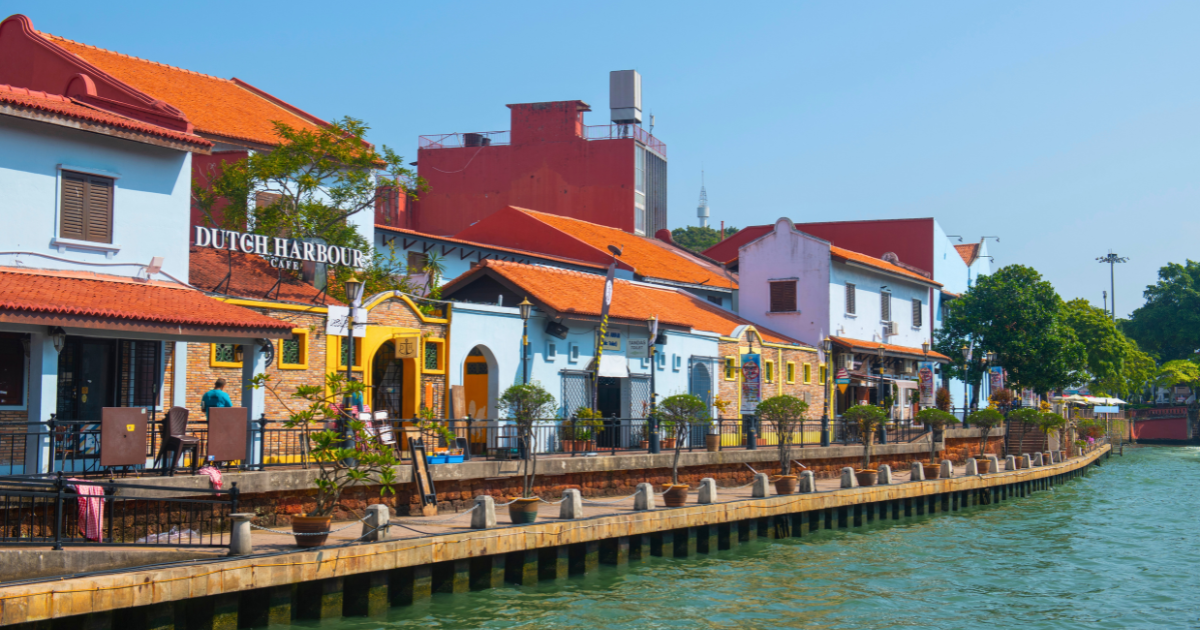
Melaka was captured by the Portuguese in 1511, the Dutch in 1641 and the British in 1824, three centuries of colonial rule still visible along its riverfront.
What to eat in Malaysia on a first visit?
Food is the subject that dominates any Malaysia travel guide, and for good reason. Malaysian food draws on four main culinary traditions, including Malay, Chinese, Indian and Peranakan, with strong regional variation between Penang, Melaka, the east coast and Borneo. Most eating happens at hawker centres, kopitiams (traditional coffee shops) and small specialist restaurants rather than fine dining venues, and prices remain low even in major cities. First time visitors are usually surprised by how central food is to daily life and how often locals will recommend a stall they have eaten at for decades.
Nasi lemak, rendang and the staples of Malay cooking
Malay food is often the first cuisine travellers encounter, particularly at breakfast. Nasi lemak, considered the national dish, is coconut rice served with sambal, fried anchovies, peanuts, half a boiled egg and cucumber, usually with a side of chicken or beef rendang. The rendang itself is a slow-cooked dry curry that originated in Sumatra and is now common across Malaysia, particularly during Hari Raya. Satay skewers with peanut sauce, mee goreng and various types of laksa round out the Malay table, and the food is consistently halal.
Char kway teow, chicken rice and Chinese Malaysian hawker dishes
Chinese Malaysian food draws from southern Chinese cooking, with strong Hokkien, Cantonese, Hainanese and Teochew lines that have evolved across more than a century of settlement. Char kway teow, a stir-fried noodle dish with prawns, Chinese sausage and bean sprouts, is most associated with Penang, where it is cooked over high charcoal heat. Hainanese chicken rice, Hokkien mee, wantan mee and bak kut teh, a pork rib soup served with rice, are widely available in cities. Morning kopitiams remain the standard place for breakfast and a plate of kaya toast with kopi.
Roti canai, banana leaf meals and the Indian Malaysian table
The Indian Malaysian table draws mainly from southern India and Sri Lanka, with strong Tamil and mamak traditions. Roti canai, a flaky flatbread served with dhal and curry, is one of the most common breakfasts in the country and available almost everywhere. Banana leaf meals, served on a fresh leaf with rice, vegetables, pickles and curry, are a Penang and Klang Valley staple. Mamak stalls, run by Indian Muslim communities, stay open late and are where most of the country eats supper, along with a glass of teh tarik, the local pulled tea.
Penang laksa, Nyonya cuisine and other regional specialities
Regional food is where Malaysia gets more specific. Penang has its own version of laksa, known as assam laksa, made with tamarind, mackerel and a herbal broth that is sharper and more sour than Singaporean curry laksa. Nyonya cuisine, also called Peranakan, developed from the marriage of early Chinese settlers and local Malay communities and is particularly strong in Melaka and Penang. Dishes like ayam pongteh, jiu hu char and Nyonya kuih are worth seeking out. Sarawak laksa, eaten in Kuching for breakfast, is another distinct style, and Borneo also brings dishes such as midin (jungle fern) and ambuyat (palm starch) into the mix.
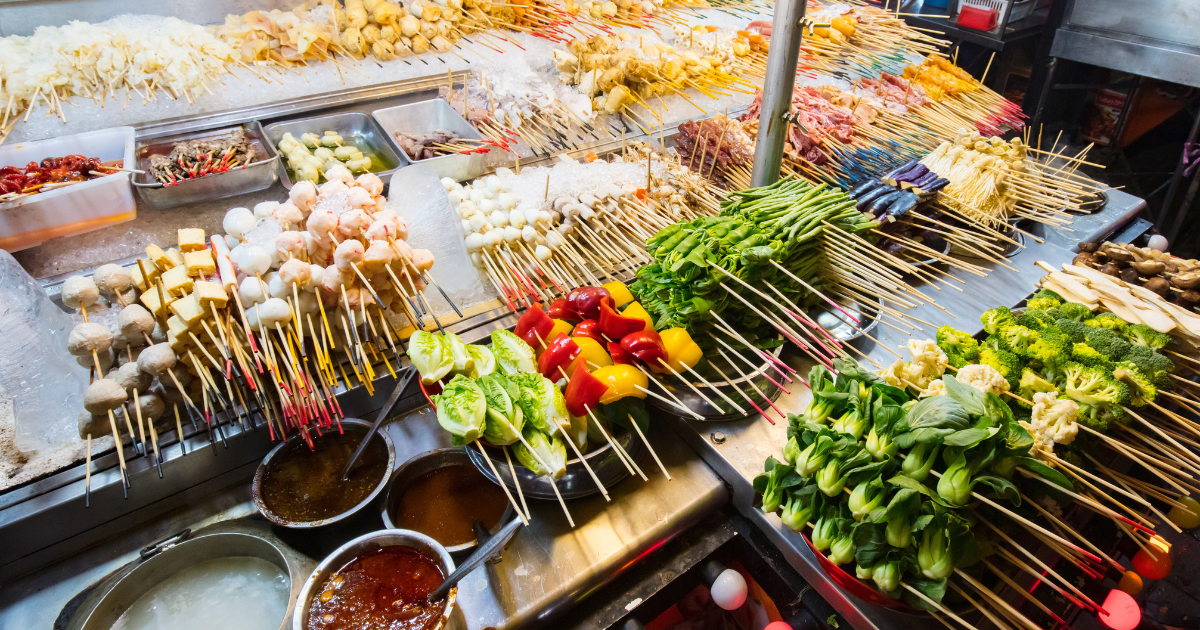
Lok lok originated in Penang in the 1970s and has since become a fixture of night markets across the country.
Is it easy to travel around Malaysia?
Malaysia is one of the easier countries in Southeast Asia to travel around. The peninsula is connected by motorways, a modern train network and domestic flights, and the Grab app works reliably in most cities. Borneo has fewer overland connections, but regular flights between Kota Kinabalu and Kuching make it straightforward to combine the two states with the rest of the country.
Getting between cities and regions
The west coast of the peninsula is served by the Electric Train Service, known as the ETS, which runs from Kuala Lumpur up to Butterworth for Penang and continues to Padang Besar on the Thai border. The journey from Kuala Lumpur to Butterworth takes around four hours on comfortable modern carriages and runs to a reliable schedule. Intercity coaches connect almost every town worth visiting and are inexpensive, although the train is generally preferred on the west coast route. Driving is also straightforward, with the North-South Expressway running the length of the peninsula.
Domestic flights are the main way of moving between Peninsular Malaysia and Borneo. AirAsia, Malaysia Airlines and Batik Air all operate from Kuala Lumpur International Airport, with flights to Kota Kinabalu taking around two and a half hours and to Kuching just over two. Within Borneo itself, internal flights between Kota Kinabalu, Kuching and smaller airports are usually faster and more practical than long road journeys.
Local transport and ride-sharing
Grab is the main ride-share app across the country and works in every major city. It is cashless, has an English interface, and is usually cheaper than a metered taxi. In Kuala Lumpur, the LRT, MRT, monorail and KTM commuter trains cover most of the city centre and outer suburbs, with a single Touch n Go card used across the network.
In Penang, Melaka and Cameron Highlands, distances are short enough that walking and the occasional Grab are usually enough to get around. The heritage zones of George Town and Melaka are best explored on foot, since the old town areas are compact and traffic moves slowly. In Borneo, ride-share coverage is good in Kota Kinabalu and Kuching but thins out in smaller towns, where private transfers or guided tours are the more practical option.
What should you wear in Malaysia as a tourist?
Lightweight, breathable clothing in cotton or linen works best for Malaysia's tropical climate, with shoulders and knees covered when visiting religious sites or the more conservative east coast. Cities are relaxed in everyday settings, while a light scarf, a sarong and rain protection are practical additions for most trips.
In Kuala Lumpur and Penang, locals dress much as they would in any major city, and visitors do not need to dress conservatively in everyday settings. The east coast states of Kelantan and Terengganu are more traditional, and visitors are expected to dress modestly in public, particularly women. For religious sites, shoulders, upper arms and knees should be covered, and a light scarf is useful for women visiting mosques. A sarong is helpful for impromptu temple stops and for the beach.
In Borneo, lightweight clothing works at sea level, but the slopes of Mount Kinabalu and the higher elevations of the interior require warmer layers in the evenings. The Cameron Highlands on the peninsula also call for a light jacket after dark. Rain protection is needed year-round in Borneo and through the monsoon months across the country.
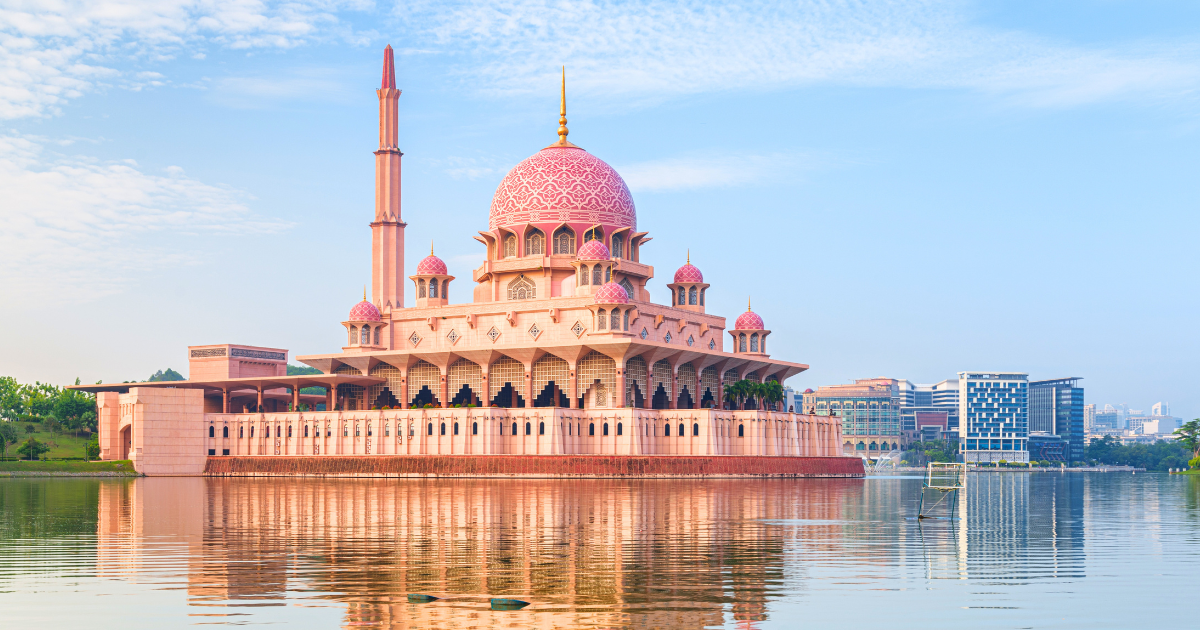
Masjid Putra was completed in 1999 as the main mosque for Malaysia's purpose-built administrative capital. Visitors are welcome outside prayer times.
Cultural etiquette to know in Malaysia
Malaysia is a Muslim-majority country with significant Buddhist, Hindu and Christian communities, and cultural norms vary by region and setting. Cities are relaxed by Asian standards, while the east coast and rural areas remain more conservative. The main considerations for visitors are using the right hand in social and dining contexts, following local norms around greetings and photography, and respecting the conventions of religious sites and Malaysian homes.
Religion and religious sites
Islam is the official religion of Malaysia, with around 63 percent of the population identifying as Muslim, alongside large Buddhist, Hindu and Christian communities and smaller Sikh and Chinese folk religion populations. Mosques, Hindu temples and Buddhist temples are all open to visitors outside prayer times, and most welcome respectful foreign guests. Shoes are removed before entering any place of worship, and many of the larger mosques such as Masjid Negara in Kuala Lumpur and the Pink Mosque in Putrajaya will provide a robe and headscarf for women who need them.
Friday is the main day of prayer for Muslims, and mosques are busiest from around noon until 2pm. Businesses in some states observe a slightly shorter working day on Fridays to accommodate this. Ramadan, the Muslim month of fasting, shifts earlier by about ten days each year, so it is best to check the current dates before travel. Eating in public during daylight hours is generally fine for non-Muslims in cities, although it is considered more polite to be discreet, particularly in the east coast states.
Greetings and language
Handshakes are common across Malaysia but are generally lighter than in Australia or Europe. Some Malay Muslim women prefer not to shake hands with men, often placing their right hand over their heart instead, and the same is true for some Malay men greeting women. The salaam, in which both parties briefly touch fingertips and then bring the hand to the heart, is also widely used in Malay settings.
Malay is the national language, and a short greeting in Malay is appreciated even though English is widely spoken in cities and tourist areas. Selamat pagi for good morning and terima kasih for thank you go a long way. Older Malaysians are sometimes addressed as pakcik for uncle and makcik for auntie regardless of family relation, which is considered a sign of respect rather than presumption.
Visiting homes and dining customs
The right hand is used for eating, giving and receiving items, particularly in Malay and Indian settings. Eating with the hands is common at Malay and South Indian meals, and a small bowl of water is often provided for rinsing before and after. In Chinese settings, chopsticks and spoons are standard, although it is considered impolite to leave chopsticks standing upright in a bowl of rice.
Shoes are removed before entering homes and many small businesses, and a stack of shoes by the door is the cue. Guests are usually offered tea, coffee or cold drinks on arrival, and it is polite to accept at least one. Most Malay homes do not serve pork or alcohol, and asking before bringing either as a gift is the safer course.
Photography and public conduct
Photography of people, particularly women in religious dress, should always be done with permission. The same applies inside mosques and temples, where signs often indicate which areas are open to cameras and which are not. Public displays of affection are kept low key across the country, more so in conservative areas like the east coast than in cities like Kuala Lumpur and Penang.
Tipping is not part of local culture and is not expected at restaurants, taxis or hotels, although it is becoming more common in upmarket venues. Speaking quietly in public is the norm, and pointing with the thumb rather than the index finger is the standard way to indicate something or someone.
Practical Malaysia travel advice for first time visitors
The practical side of planning a first visit to Malaysia comes down to three things, including entry requirements, money, and what to bring. Most visitors staying under 90 days do not need a visa but must complete the Malaysia Digital Arrival Card before entering the country, the Malaysian Ringgit is the only currency in use, and the tropical climate is the main factor in what to pack.
Entry requirements, MDAC and visas
Australian, New Zealand, British, American and EU passport holders receive 90 days of visa-free entry to Malaysia on arrival, which covers almost all first time visits. Passports need at least six months of validity from the date of arrival and a couple of blank pages. The Malaysia Digital Arrival Card, known as the MDAC, is the one piece of paperwork to handle in advance and is completed online within three days of arrival. The MDAC is free through the official Malaysian Immigration Department website, and a number of unofficial sites charge a fee for the same form, so using the genuine one is the easier path.
Sabah and Sarawak have separate immigration controls from the peninsula, and travellers receive a fresh entry stamp when flying from Kuala Lumpur to Kota Kinabalu or Kuching. There is no additional visa requirement, but the stamp resets the count of days allowed in those states. The arrangement dates back to the federation agreement of 1963 and runs smoothly with no extra paperwork for visitors.
Currency, cash and card use
The Malaysian Ringgit, written as RM or MYR, is the local currency. At current rates, one Australian dollar buys roughly three Ringgit, and the rate is generally stable for trip planning. ATMs are widely available in cities and most towns, and major Australian debit and credit cards work without difficulty.
Contactless card payment is widely accepted in hotels, supermarkets, chain restaurants and shopping centres. Hawker stalls, small markets, taxis outside the Grab system and more rural areas still run on cash. The Touch n Go eWallet is used by locals for transport and small purchases but is harder for tourists to set up because it requires a Malaysian phone number, so a combination of cash and card is the easiest approach for most visitors.
What to pack for Malaysia
Beyond the lightweight clothing already covered, a few practical items make a first trip easier. Insect repellent with DEET is useful for Borneo and any jungle stops, and high SPF sunscreen in foreign brands is harder to find in Malaysian supermarkets. A compact umbrella or light rain jacket is helpful through the monsoon months and on Borneo trips. Slip-on shoes are handy for religious sites where shoes come off at the door.
Malaysia uses the Type G three-pin plug, the same as the United Kingdom, so a UK travel adapter or universal adapter is needed. Many travellers also bring a reusable water bottle, basic over-the-counter medication for upset stomachs, and any prescription medication in original packaging with a copy of the script. Dive-certified travellers heading to Sipadan should bring their certification card.
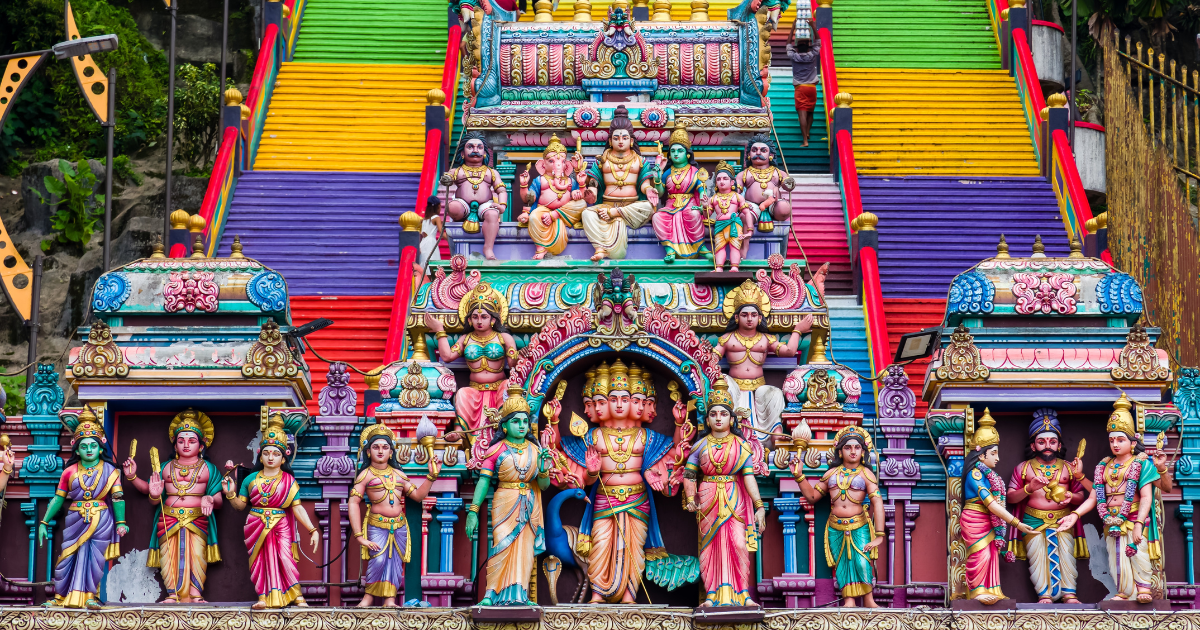
Batu Caves has been a Hindu pilgrimage site since the late 19th century and hosts one of the largest Thaipusam celebrations outside India each January or February.
Travelling to Malaysia with Asia Unbound
Asia Unbound specialises in privately arranged journeys across Southeast Asia, with Malaysia offered as both a destination in its own right and a useful starting point for multi-country trips through the region. Our Malaysia itineraries are tailored around individual interests, typically combining the cultural cities of the west coast peninsula with the rainforest and wildlife of Sabah or Sarawak.
Each journey is built around regional specialists on the ground, carefully chosen accommodation, and expert local guides who can speak to the history, food and traditions of the places visited. Our team can build any first time Malaysia itinerary around the time available, the regions of most interest and the best season for each part of the country. Explore our Malaysia private tour packages or contact our team to begin planning a journey tailored to your interests.