
Hiking To Ulsanbawi Rock In Seoraksan National Park
Seoraksan National Park occupies a long stretch of South Korea's northeast coast, where the Taebaek mountain range meets the East Sea. It was the first national park designated in South Korea, in 1970, and UNESCO listed it as a Biosphere Reserve twelve years later. The park is all granite with sharp ridgelines, exposed cliff faces and rock formations that look like they were dropped into the forest from somewhere else entirely.
The most recognisable of those rock formations is Ulsanbawi, a cluster of six granite pillars on Seoraksan's northern face that rises 873 metres above sea level. According to Korean folklore, the rock was on its way to join Mount Geumgang but arrived too late, and settled in Seokrasan instead.
Of all the Seoraksan hiking trails, the route to the top of Ulsanbawi is one of the most popular, with a path that moves from flat forest to a final kilometre of steep metal stairways bolted into exposed rock.
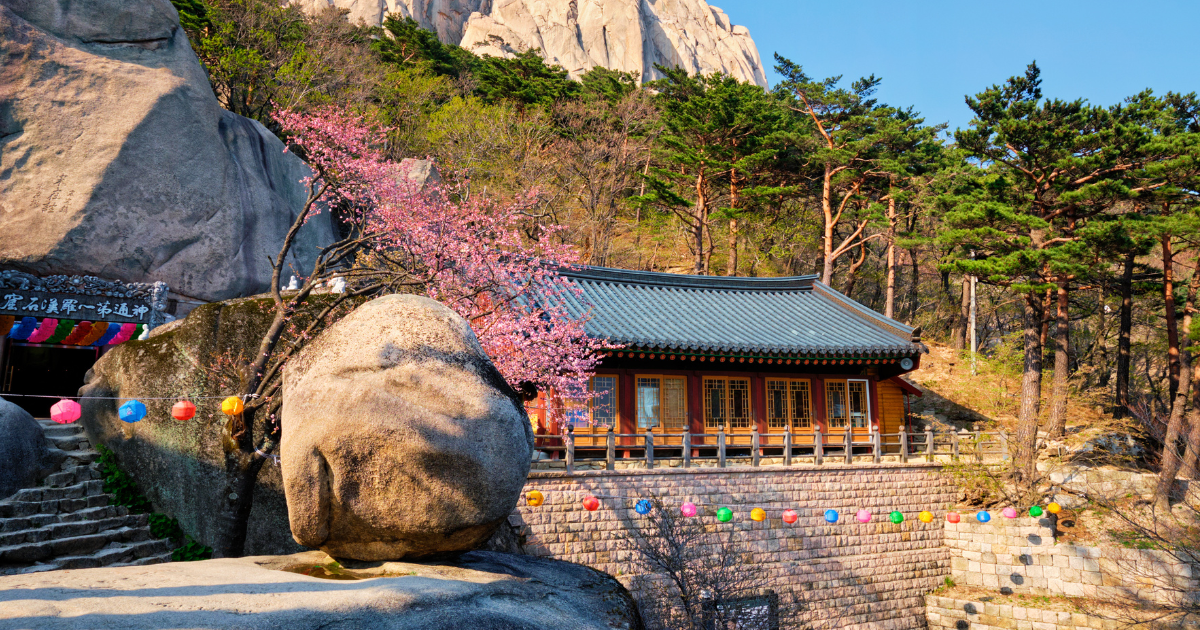
A small temple sits at the base of Ulsanbawi, a reminder that the rock sits within a landscape with deep cultural as well as natural significance.
What is Ulsanbawi Rock?
Ulsanbawi is a cluster of six granite peaks on the northern face of Seoraksan National Park, rising 873 metres above sea level. The formation is one of the most recognisable landmarks in the park and one of the defining features of the Seoraksan skyline when viewed from the town of Sokcho to the east.
The rock is composed of coarse-grained granite, formed deep underground and exposed over millions of years through weathering and erosion. As the surrounding softer rock wore away, the harder granite remained, producing the steep, angular pillars visible today. The vertical faces and narrow fissures between each pillar give the formation its distinctive layered profile, which sets it apart from the rounder, more weathered peaks elsewhere in the Taebaek range.
The six pillars stretch roughly 4km in circumference at their base. Up close, the rock face shows visible grain patterns and surface fractures where freeze-thaw cycles have continued to shape the stone. Vegetation clings to crevices and lower ledges, but the upper sections are largely bare, which is part of what makes Ulsanbawi so visually striking against the surrounding forest.
What is the story behind Ulsanbawi Rock?
Ulsanbawi is also tied to a well-known piece of Korean folklore. According to the story, the rock originally set out from Ulsan in the southeast to join the famous peaks of Mount Geumgang, which was said to be gathering the most impressive rocks in the country. Ulsanbawi arrived too late, found no place among the other formations and settled in Seoraksan instead.
The legend is still familiar across the region and gives the formation an identity that goes beyond geology. Korean landscape traditions often attach names, characters and origin stories to natural formations, and Ulsanbawi is one of the more enduring examples. For many visitors, knowing the folklore before starting the hike adds a second layer to the climb that the physical landscape alone does not provide.
Why is Ulsanbawi one of Seoraksan's most popular hikes?
Seoraksan has a range of trails that vary in length, difficulty and character, but Ulsanbawi consistently draws the most foot traffic on the park's northern side. The trailhead is accessible from the main park entrance near Sokcho, no permit is required and no technical experience is needed, so the hike is open to a wide range of visitors.
The route also has a structure that many of the park's shorter or flatter walks lack. It moves from a gentle forested path into a steeper, more exposed final section where the landscape opens up and the rock becomes the dominant feature. There is a clear summit goal and a physical challenge to reach it, which gives the hike a sense of arrival that keeps drawing people back.Seoraksan is often included as part of a backroads route through South Korea that pairs the park with quieter stretches of the east coast and the country's lesser-visited inland regions.
How hard is the hike to Ulsanbawi Rock?
The hike to Ulsanbawi Rock is challenging, but it is also straightforward and rewarding. When travellers ask about Ulsanbawi difficulty, the answer usually comes down to the steady ascent and the long stair section near the top, rather than any technical terrain or scrambling. The route is around 3.8km each way, and many travellers allow roughly two to three hours for the ascent depending on pace and rest stops.
Is the Ulsanbawi hike suitable for beginners?
Yes, the Ulsanbawi hike can suit beginners, provided they are comfortable with uphill walking and are prepared for a longer climb than the distance first suggests. The trail is well established and widely used, which makes it approachable for travellers with no technical hiking experience.
The key is to approach the hike with the right expectations. Ulsanbawi is a proper mountain walk, so it helps to pace yourself and save energy for the final stretch. Travellers who enjoy active days outdoors often find the climb manageable, especially with an early start and cooler conditions.
How steep is the final stair section?
The final stair section is the steepest part of the hike and the point where the climb feels most dramatic. After the lower trail through the forest, the route shifts onto a long run of metal stairways fixed into exposed rock, making the final approach feel more direct and memorable.
For many walkers, this is also the most rewarding part of the ascent. The stairs call for a steady pace, but they are clear, well-built, and easy to follow. The challenge comes from the incline rather than the terrain itself, which means the section feels achievable while still giving the climb a real sense of progression.
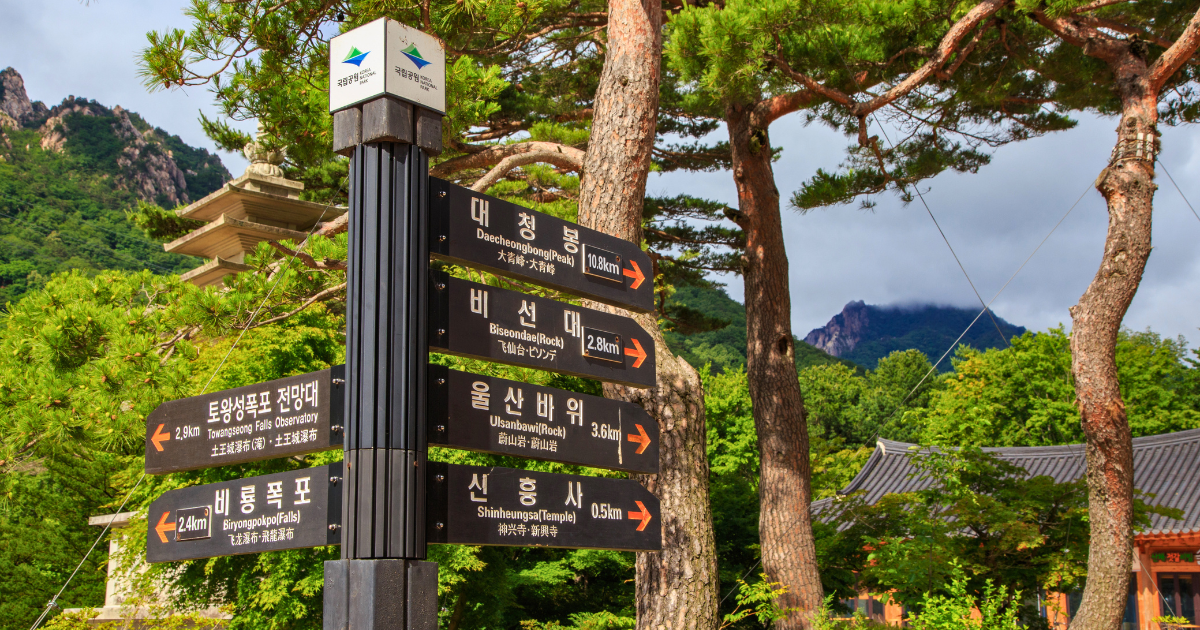
The Ulsanbawi trail begins from the main park area, around 3.6km from the rock itself.
How long does it take to hike Ulsanbawi?
Most travellers should allow around four to six hours for the full hike, including the return walk and short breaks along the way. A typical ascent takes about three hours from the main park entrance, with the descent usually taking less time. The route is best approached as a half-day hike, which gives enough time to climb steadily and enjoy the summit without feeling rushed.
Timing can vary depending on pace, trail conditions and how busy the route is, especially near the final stair section. Even so, the hike is straightforward to plan and works well for travellers looking for a rewarding day walk in Seoraksan.
When is the best time to hike Ulsanbawi?
The best time to hike Ulsanbawi is usually spring or autumn, when conditions are cooler and the trail is at its most comfortable. Seoraksan is known for seasonal change, with spring bringing fresh growth and autumn bringing clear skies and foliage, which is one reason these months are often the most appealing for day hikes in the park.
Summer can still be a good time to walk Ulsanbawi, especially with an early start, but warmer temperatures and heavier seasonal rain can make the climb feel slower. Winter brings a different kind of appeal, with clear air and snow on the surrounding peaks, though icy sections can make the trail more demanding.
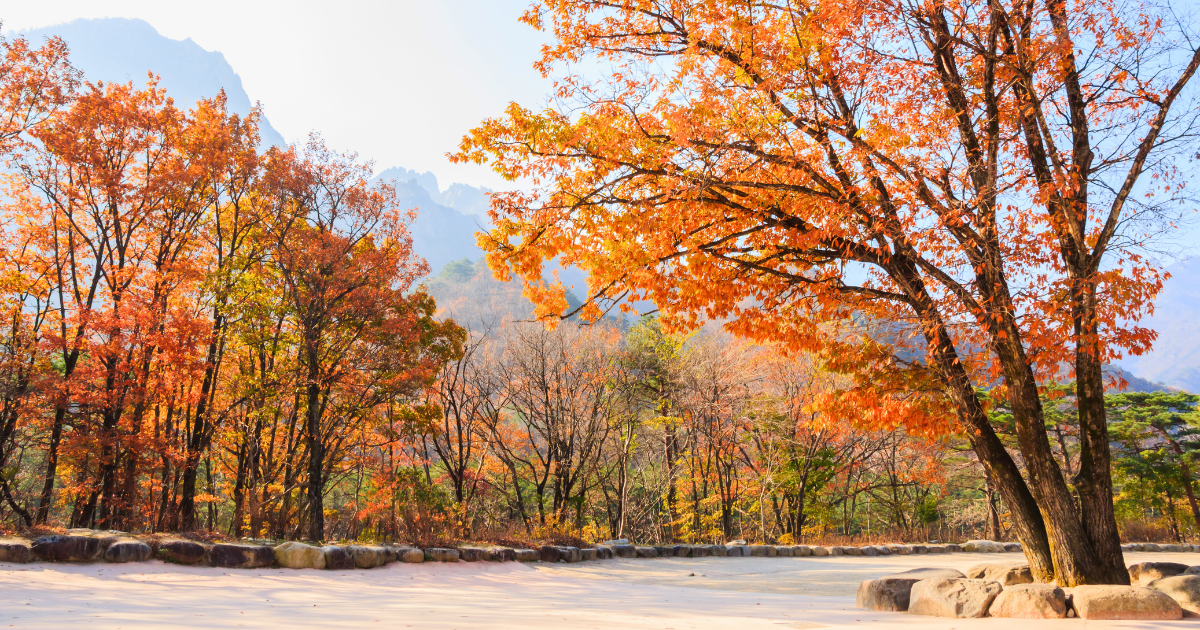
Autumn colour typically peaks in Seoraksan between mid-October and early November.
What should you know before hiking to Ulsanbawi Rock?
A little preparation makes the Ulsanbawi hike more comfortable from the start. The trail is well established and easy to follow, but it still helps to treat it as a proper half day walk rather than a short stop within the park. An early start, practical clothing and enough water are usually all that is needed for a smoother climb.
What should you wear for the Ulsanbawi hike?
Light, comfortable hiking clothes and supportive walking shoes are usually the best choice for Ulsanbawi. The trail begins gently, but the climb becomes steeper as it continues, so footwear with good grip is useful on both the path and the final stair section. Layers also work well, especially in spring and autumn, when temperatures can shift over the course of the morning.
How much food and water should you bring?
It makes sense to carry enough water for a steady climb and a few simple snacks for the way up. Ulsanbawi is not an especially long hike, but the ascent can take a few hours, so having water on hand makes the walk more comfortable, especially in warmer weather. Snacks are usually enough rather than a full meal, particularly for travellers treating the route as a half day hike.
What facilities are available before the climb?
The main visitor area at Seoraksan is set up well for day hikers. Parking and restrooms are available near the start, and the Seoraksan National Park Visitor Center sits nearby for those wanting general information before setting off. The Ulsanbawi route itself begins from the main park area, so the practical side of the hike is relatively clear once inside the park. Most travellers reach Seoraksan from the nearby town of Sokcho, which is typically included as part of a private journey through South Korea.
Is hiking to Ulsanbawi Rock worth it?
For many travellers, hiking to Ulsanbawi Rock is one of the most rewarding walks in Seoraksan National Park. The trail is physically demanding in parts, but it gives a clear sense of the park’s landscape as the route moves from lower forest into exposed granite near the summit. That progression is a large part of what makes the hike stand out.
The view from the top is one reason the hike is so popular, but the appeal of Ulsanbawi is not limited to the summit alone. The climb itself gives the walk its character, particularly in the final section where the stairways rise through the rock. For hikers with the time and fitness for a longer day walk, Ulsanbawi is often one of the most satisfying hikes in the park.
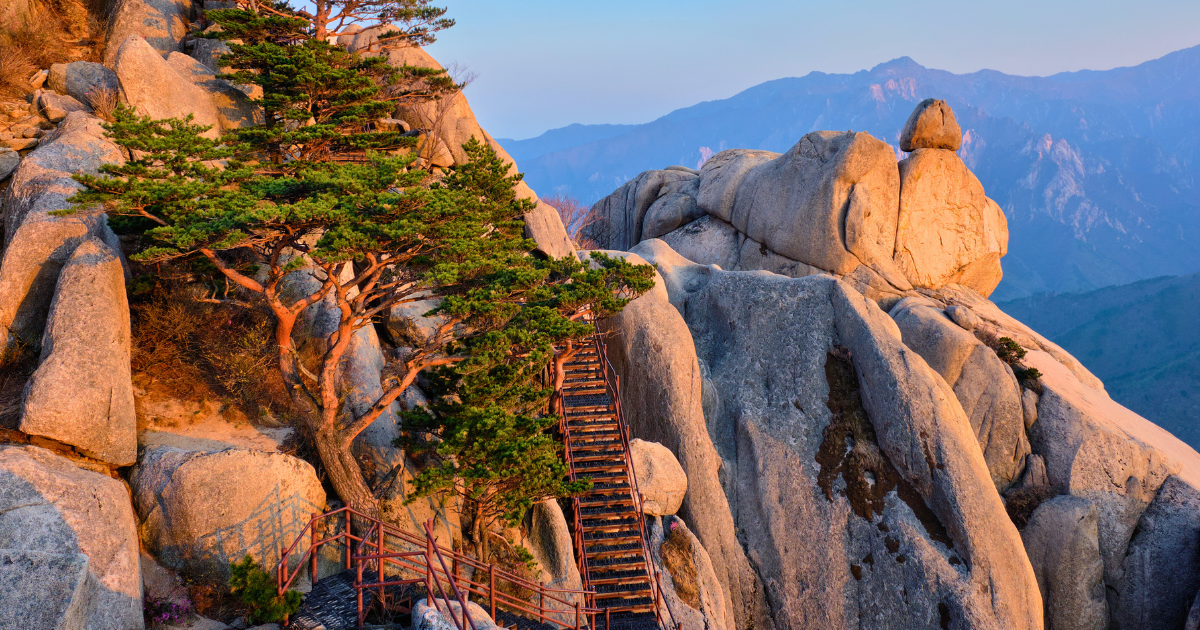
The final stair section covers the steepest part of the ascent, with the summit reached shortly after.
Hiking in Seoraksan National Park with Asia Unbound
At Asia Unbound, we design private journeys through South Korea that balance cultural depth with thoughtful pacing. From Seoul and Gyeongju to Seoraksan National Park, each itinerary is shaped around your interests and travel style. If you are considering a journey through South Korea, contact us to tailor an itinerary that includes Ulsanbawi alongside the country’s historic cities, food traditions and varied landscapes.