
6 Things To Do In Coron Beyond The Beaches
Coron sits at the northern end of Palawan province, on Busuanga Island in the Calamianes group. The name causes some confusion. Most visitors stay in Coron Town on Busuanga, while the limestone island they photograph on tours, Coron Island, sits across the water and is the ancestral domain of the Calamian Tagbanua. Together these islands form one of the more remote corners of the Philippines, reached by a short flight from Manila or Cebu.
For many travellers, the entire Coron visit revolves around the water. The lagoons, the clear inland lakes and the cluster of Japanese shipwrecks resting on the seabed have made it one of the better known destinations in the Philippines, and the standard itinerary rarely leaves the sea. Days are spent moving between snorkelling stops and dive sites, with the town treated as little more than somewhere to sleep and refuel.
But there is more to the area than the tours suggest. The things to do in Coron on land include a hill climb with a wide view over the archipelago, a saltwater hot spring, the quieter reaches of Busuanga and a small working town shaped by fishing and the daily catch.
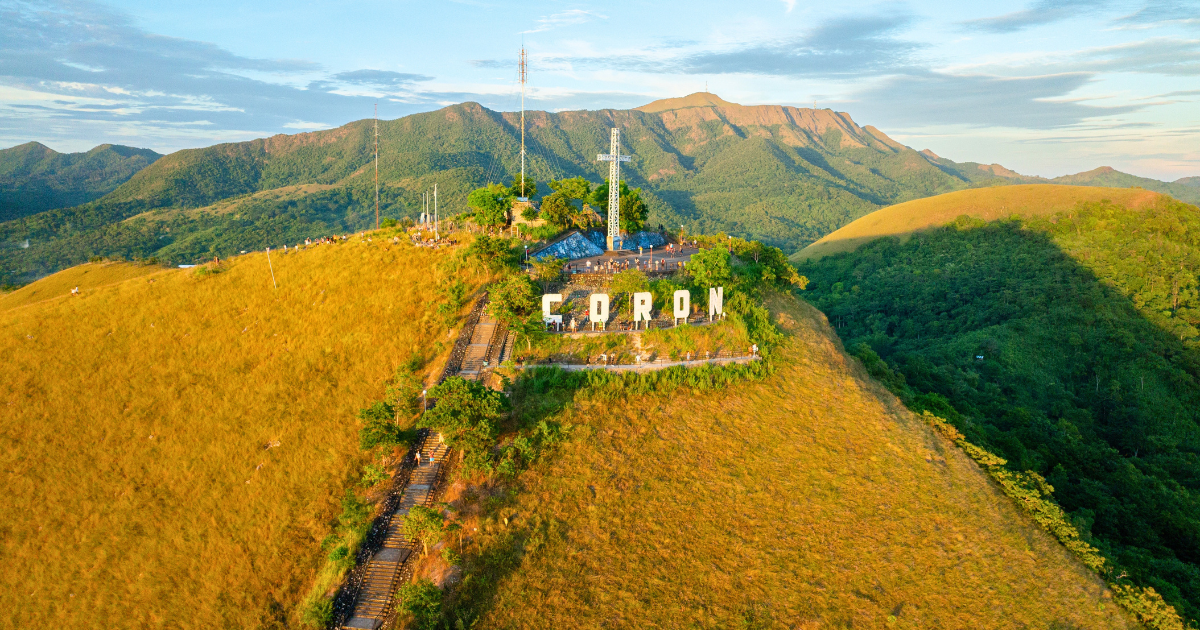
Mount Tapyas rises about 210 metres above Coron Town, with more than 700 steps to the top.
Where Coron is and what it is known for?
Coron is the most visited destination in the northern Palawan archipelago, made up of several islands grouped together as the Calamianes. The area sits between mainland Palawan and the open sea to the north, and the name itself refers to two different places that often get confused. Coron Town is the settlement on Busuanga Island, while Coron Island is the limestone island opposite, separated by a short stretch of water.
Where does Coron sit in Palawan?
The Calamianes lie at the far northern end of Palawan province, well above the more visited stretch around El Nido and Puerto Princesa. Busuanga is the largest of the islands and holds the airport, the main town and most of the accommodation. Coron Island, Culion and a scatter of smaller islands sit around it, with the further reaches of the group running south towards Linapacan. The area is remote enough that it feels distinct from the rest of Palawan, with its own pace and a stronger sense of being out at sea.
The Calamianes also have a different feel from the long, narrow main island of Palawan to the south. The landscapes are smaller and more broken up, with sharp limestone karst rising straight out of the water and a scatter of bays and small islands rather than a single coastline. The region is part of the Coral Triangle, the marine area between the Philippines, Indonesia and the Pacific that holds the highest reef biodiversity in the world, which is part of the reason its waters are as clear and life-filled as they are.
How to reach Coron?
Most travellers arrive by air, with Francisco B. Reyes Airport at Busuanga taking daily flights of around an hour from Manila and Cebu. The airport sits about 30 minutes by road from Coron Town, and transfers are easy to arrange in advance. The road from the airport is sealed and the drive cuts through the open interior of Busuanga, which gives a first sense of the island before town.
A slower overnight ferry from Manila runs several times a week and is a useful option for travellers carrying dive gear or simply preferring the sea, with the crossing taking around 12 to 15 hours. During the dry season, from roughly November to May, smaller passenger boats also link Coron with El Nido in three to four hours, which makes a combined northern Palawan trip simple to put together without backtracking through Manila. The route closes when the seas pick up in the wet months, so timing matters if a sea crossing is part of the plan.
What Coron is famous for?
Coron is best known for its waters, particularly the lagoons and lakes around Coron Island and the cluster of Japanese shipwrecks lying off Busuanga. Kayangan Lake and Twin Lagoon are some of the most photographed places in the Philippines, with clear freshwater meeting saltwater inside walls of limestone. These sites lie within the ancestral domain of the Calamian Tagbanua, who manage access and charge a fee that supports the community.
The wrecks have made Coron one of the country's better known wreck diving destinations. A Japanese fleet of supply ships and warships was sunk by American aircraft in September 1944, and around a dozen of those wrecks now lie in shallow enough water to be dived recreationally. Beyond the lagoons and the wrecks, snorkelling, beach stops and the limestone scenery fill the rest of the standard itinerary. The land side is quieter and rarely covered in tour brochures, but the town, the springs, Mount Tapyas and the wider reaches of Busuanga add another layer to a stay.
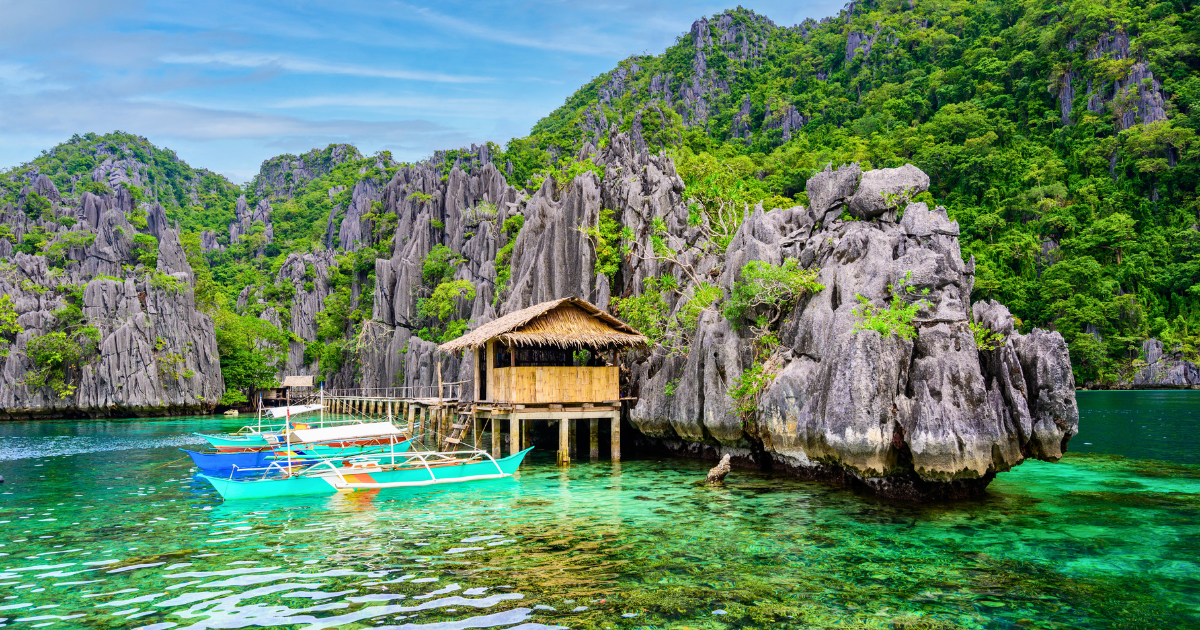
The limestone cliffs around Coron were once coral reef, pushed up over millions of years and full of caves and hidden lagoons.
What to do in Coron besides island hopping?
Most of the things to do in Coron away from the water are easy to fit around the island tours. A few sit within half an hour of town by tricycle or van, while others are simply a matter of spending unhurried time around Coron itself. They make good use of the hours the boats leave free, whether between tour days or on a day spent entirely ashore.
Hike Mount Tapyas for views over the Calamianes
Mount Tapyas rises directly behind Coron Town, topped by a lit cross and a viewing deck reached by a concrete stairway of more than 700 steps. The climb takes most people around twenty to thirty minutes and is at its best in the last hour before sunset, once the heat has eased. From the top the view opens right across the region and makes sense of the geography in a way no map can. The scattered islands of the Calamianes lie below, the harbour and its boats sit directly underneath, and the limestone wall of Coron Island fills the southern horizon.
Soak at Maquinit Hot Springs
About 30 minutes from town by tricycle, Maquinit is one of the few saltwater hot springs anywhere, fed by geothermally heated seawater that sits at a comfortable 38 to 40 degrees. The pools are stone-edged and set against mangroves at the water's edge, with the warmth rising pleasantly as the light drops. It pairs naturally with Mount Tapyas, since the climb works the legs and the springs are the perfect place to rest them afterwards. Late afternoon into evening is the ideal time, when the cooler air makes the warm water all the more inviting.
Visit Calauit and explore the Busuanga backroads
At the northern end of Busuanga, Calauit Safari Park holds giraffes, zebras and other African animals brought to the island in 1977, now thriving alongside native Calamian deer. Reaching it means an early start and a few hours on the road, which is half the reward, as the drive crosses a stretch of Busuanga most visitors never see. The interior is open and thinly settled, broken by mangrove inlets, small farms and the occasional beach reached down a quiet track. A rented motorbike or a hired van and driver opens up this side of the island beautifully for anyone keen to spend a day away from the boats.
Bioluminescence and firefly tours
After dark, a few operators run small boat trips into the mangrove channels around Coron Bay, where two natural light shows come together. Fireflies gather in the mangroves along the banks, while the water below stirs up bioluminescent plankton that glows pale blue with each dip of the paddle. The tours run on moonless or near-moonless nights when the darkness lets both effects shine, so timing follows the lunar calendar rather than the daily schedule. It makes for a calm, gentle outing, usually an hour or two on the water, and a lovely counterpoint to the busier daytime trips.
Spend time around Coron town
Coron Town is small and flat, easy to cross on foot or by tricycle, and much of its charm sits along the waterfront and around the public market. Wooden bangka boats come and go from the pier through the day, and the morning market is where the fishing catch lands and indigenous handicrafts and pearl jewellery appear among the produce. The Coron town experience is less about ticking off sights and more about watching a working Calamianes town go about its day, which it does at an unhurried pace once the boats have left.
Try local food and slow evenings by the water
The food in Coron is very good, especially for such a small town. Most of it is fresh fish, caught the same day and cooked that evening. Grilled fish, squid and prawns are the popular choices, usually served with rice and a squeeze of calamansi, a small local citrus that tastes like a cross between a lime and a mandarin. A few restaurants near the water get busy after dark, and the cooler evening air makes the waterfront a nice place to sit. A good meal and a slow walk or tricycle ride along the front is most of the evening's entertainment, and it is part of what makes Coron easy to settle into.
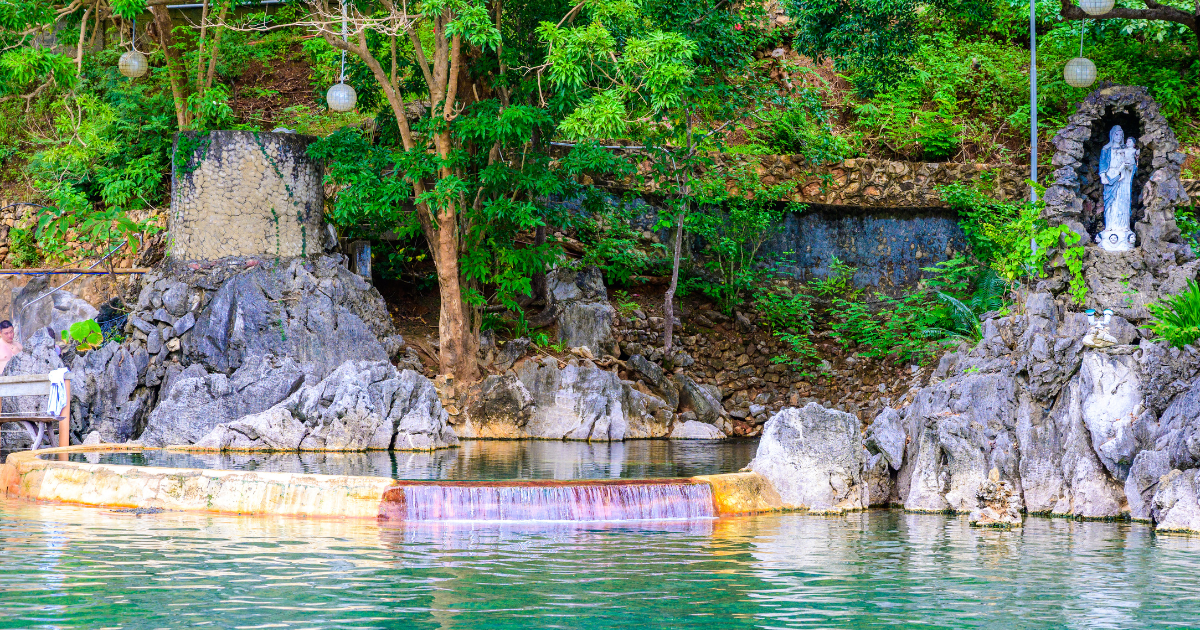
Maquinit is fed by geothermally heated seawater at 38 to 40 degrees, one of the few saltwater hot springs anywhere.
What is Coron like beyond the boat tours?
Away from the boats, Coron is quieter and more ordinary than its scenery suggests. It is a working town in a remote part of Palawan, so the pace and the daily routine all belong to the people who live there. The time spent on land has a different character to the days out on the water, and for many travellers it is the part of Coron that stays with them.
The pace is slower outside the port
The busiest part of Coron is the pier in the early morning, when the day boats load up and head out, and again in the late afternoon when they return. In between, the town empties of visitors and settles into its own routine, with shops opening late, tricycles idling in the shade and the heat keeping everyone to a gentle pace. This lull is a good time to be on land, whether resting between boat days or simply taking the town as it comes. Travellers used to busier destinations often find the quiet hours the most memorable part of a stay.
The people give Coron its character
The Calamianes are home to the Calamian Tagbanua, one of Palawan's indigenous groups, who hold Coron Island and its lakes as ancestral domain and manage access to much of it. Theirs is a sea-oriented way of life built around fishing, seaweed and the gathering of swiftlet nests from the limestone cliffs, and their stewardship is the reason the islands remain as protected as they are. Around town, the wider community is a mix of Tagbanua, Cuyonon and families who have come from elsewhere in the Philippines, making their living from fishing, pearls and increasingly from tourism. A short conversation at the market or on the pier tends to leave a stronger impression than any single sight.
Busuanga shows a quieter side of Coron
Most visitors never leave the immediate area around Coron Town, but the wider island of Busuanga rewards anyone who does. The land is open and lightly populated, with red-earth roads running past rice plots, grazing cattle and small fishing barangays where tourism has barely reached. Reaching the further corners takes a hired vehicle and a willingness to spend a day on rougher roads, and the reward is a part of Palawan island life that the boat tours never touch. For travellers who like to understand a place beyond its highlights, this is where Coron feels most genuine.
What should I know before visiting Coron?
A little planning makes the things to do in Coron on land easier to enjoy, since the town is remote and the activities are spread across Busuanga. A few practical points on how long to stay, where to base yourself and how to get around will help travellers make the most of the time off the water.
How many days should you spend in Coron without diving?
Two full days are enough to see Coron’s main land attractions at a comfortable pace, with Mount Tapyas and Maquinit Hot Spring fitting well into one afternoon and the town, market, and waterfront filling the rest. A third day gives enough time for Calauit or the further reaches of Busuanga without rushing. Most visitors pair these land days with one or two boat days, so three to five nights works well for Coron without diving.
Where should you stay for easy access to Coron Town?
Coron Town has the widest choice of accommodation and puts the pier, market, restaurants, and tricycle routes within easy reach. Smaller resorts on the outskirts and nearby islands are quieter, though they usually rely on tricycles or boat transfers for trips into town. For a stay built around land activities and day trips, a central guesthouse or small hotel is the easier base and often has more character than the larger places further out.
How do you get around Coron and Busuanga?
Tricycles are the main way of getting around town and out to nearby spots like Maquinit, with short fares that are easy to agree in advance. For anything further, such as Calauit or the Busuanga backroads, a hired van and driver for the day is the most comfortable option and removes any worry about directions or road conditions. Much of this can be arranged in advance on a private journey through the Philippines, which removes the day-to-day logistics from the trip.
When is the best time of day for non-boating activities?
Mornings and late afternoons are the most comfortable hours for anything on land, with the middle of the day usually too hot for walking or climbing. The Mount Tapyas hike and Maquinit are best in the hour or two before sunset, the market is at its liveliest in the early morning, and the firefly trips run after dark. Planning around the heat rather than against it makes the land days far more pleasant. The boats take up the middle of most days in any case, which leaves the cooler hours free for everything else.
Can you explore Coron Town on foot?
Coron Town is easy to cover on foot, with the pier, market and main restaurants all within a short, flat walk of one another. The streets are busy with tricycles and not always shaded, so the cooler ends of the day are the best time for a wander. Anyone who would rather not walk far can hop on a tricycle for a few pesos, which makes the town manageable whatever the pace. Getting around is rarely the difficult part of the Coron town experience.
Is Coron worth visiting beyond the boat tours?
Yes. Coron is best known for its lagoons, lakes, and island-hopping routes, but the land-based experiences add useful variety to the trip. Maquinit Hot Spring, the climb up Mount Tapyas, the morning market, and the wider Busuanga countryside all give travellers a fuller sense of the area beyond the famous boat routes. A day or two on land fits easily around the boat excursions and makes the overall stay feel more rounded and less rushed.
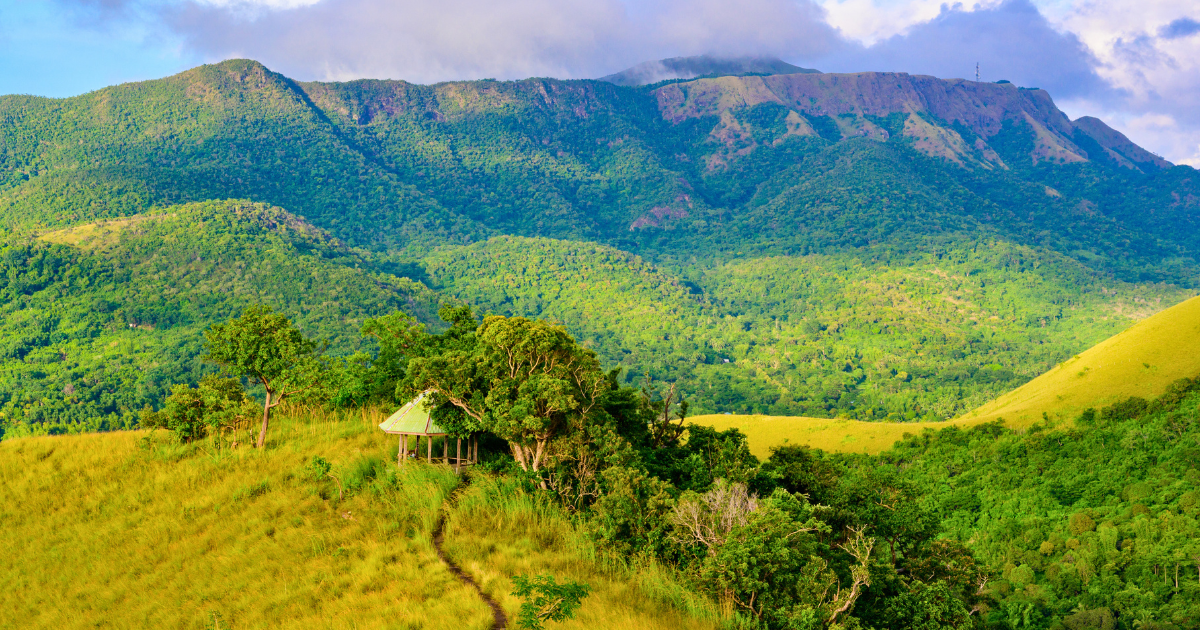
Busuanga's interior was mined for manganese during the Second World War, when the island was occupied by Japanese forces.
Travelling to Coron with Asia Unbound
Asia Unbound designs private journeys through the Philippines for travellers who want more than the standard tour route. A trip to Coron can be built to take in the lagoons and wreck dives alongside the quieter land side, with time for Mount Tapyas, Maquinit and the working life of the town and wider Busuanga. Each itinerary is arranged around the traveller's own pace and interests, with carefully chosen accommodation and expert local guides who know the Calamianes well. To start planning a journey to Coron and beyond, get in touch with the Asia Unbound team.