
A Complete Guide To Hiking Tiger’s Nest Monastery
Tucked between India and China, Bhutan is a small Himalayan kingdom shaped by mountain landscapes, deeply rooted Buddhist traditions and a strong sense of cultural continuity. Rather than measuring progress purely through economic growth, it is known for its philosophy of Gross National Happiness, which places wellbeing, environmental protection and heritage at the centre of national policy.
Travel here is structured and regulated, with all visits arranged through licensed operators and guided programmes. Most journeys move between Paro, Thimphu and Punakha, combining short hikes, monastery visits and time in rural valleys. The country’s controlled tourism model keeps visitor numbers low, shaping both the pace of travel and the experience on the ground.
The defining experience of any Bhutan tour is the hike to Tiger’s Nest Monastery. Perched high above the Paro Valley, this cliffside temple is the country’s most recognisable landmark and its most important pilgrimage site. Reaching it on foot is not only a physical highlight, but also a meaningful introduction to the spiritual identity of Bhutan.
What is the history of Tiger’s Nest Monastery?
Tiger’s Nest Monastery, known locally as Paro Taktsang, combines myth, royal patronage and modern restoration within a single cliffside complex. Its origins lie in early Buddhist tradition, while the physical structures visible today reflect later construction and careful preservation. Over centuries, the site has evolved from a meditation cave into one of Bhutan’s most important pilgrimage destinations.
Why is Tiger’s Nest considered sacred in Bhutan?
Tiger’s Nest is considered sacred because it marks the site where Guru Rinpoche is believed to have meditated for three years, three months, three weeks and three days in the 8th century. His time in this cave is said to have subdued local spirits and established Buddhism firmly in Bhutan. The monastery was later built around this meditation cave, which remains the spiritual heart of the complex.
For Bhutanese pilgrims, visiting Tiger’s Nest is both an act of devotion and a rite of passage. Many Bhutanese aim to complete the hike at least once in their lifetime. Prayer flags, butter lamps and ritual offerings reflect its ongoing role as a living religious site rather than a historic monument.
Who originally built Tiger’s Nest Monastery?
Although the sacred cave dates back to the 8th century, the monastery structures seen today were constructed in 1692. The complex was built under the leadership of Gyalse Tenzin Rabgye, a prominent religious figure and ruler of Bhutan at the time. His intention was to formalise the pilgrimage site and establish a permanent monastic presence around the cave associated with Guru Rinpoche.
Over time, additional temples and residential buildings were added, creating the interconnected complex that clings dramatically to the cliff face. The architecture follows traditional Bhutanese design, with whitewashed walls, timber-framed windows and gilded roofs reflecting regional craftsmanship and religious symbolism.
Was Tiger’s Nest destroyed by fire?
In 1998, a serious fire broke out within the monastery complex, causing extensive damage to several buildings and religious artefacts. Given its remote cliffside location, firefighting efforts were challenging, and parts of the structure were lost. The Bhutanese government, monastic community and international supporters worked together to fund and oversee a careful restoration.
Reconstruction respected traditional building techniques and religious protocols, ensuring the monastery retained its authenticity and spiritual significance. The complex reopened to pilgrims and visitors in the early 2000s, and today it stands fully restored. The fire remains a significant moment in its modern history, reinforcing the importance of preservation for Bhutan’s cultural heritage.
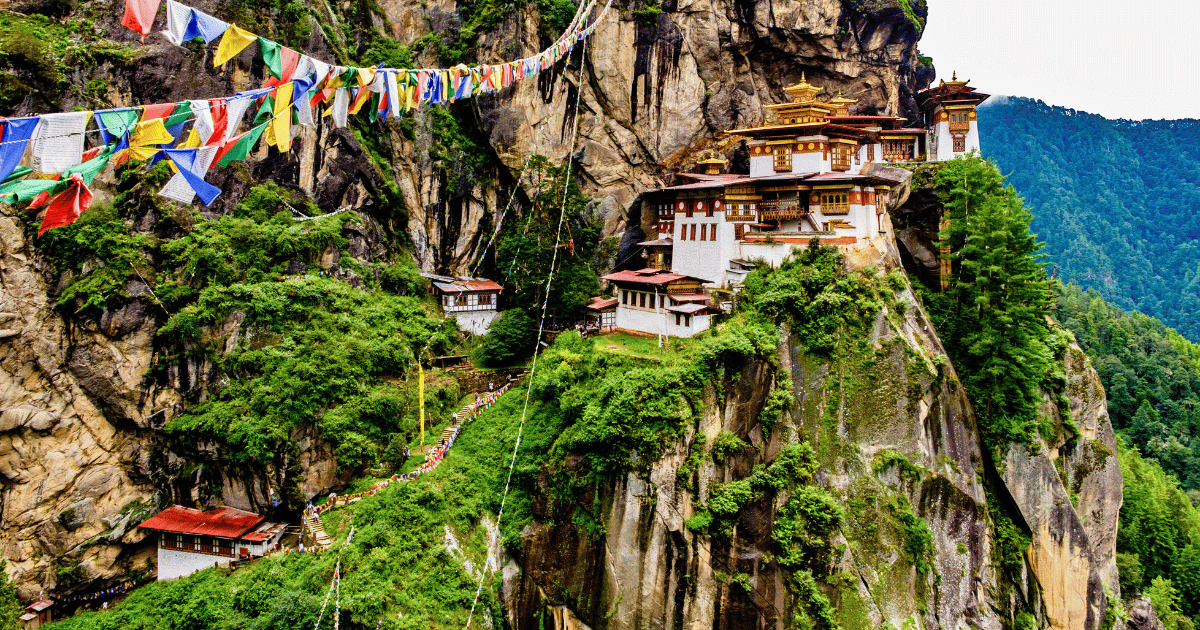
Tiger’s Nest Monastery perched dramatically on a cliff high above the Paro Valley in Bhutan, its whitewashed walls and golden roofs set against forested mountain slopes.
How difficult is the hike to Tiger’s Nest Monastery?
The hike to Tiger’s Nest Monastery is often described as challenging, but for most travellers it is a steady and manageable climb rather than an extreme trek. The trail ascends gradually through pine forest before transitioning to stone steps closer to the monastery, with continuous uphill sections that require patience more than speed.
The total walking distance is roughly 6 to 7km return, or about 3 to 3.5km each way, with an elevation gain of approximately 500 to 600 metres from the trailhead. While this is not a long-distance hike, the consistent incline combined with altitude can make it feel more demanding than the numbers suggest.
How high is Tiger’s Nest above sea level?
Tiger’s Nest Monastery sits at approximately 3,120 metres above sea level, perched on a cliff around 900 metres above the Paro Valley floor. While many travellers will have already spent a few days acclimatising in Paro or Thimphu, the elevation can still be felt during the climb.
Shortness of breath is common, particularly on steeper sections. The key is to walk slowly and allow your body to adjust naturally. Bhutan itineraries are generally designed to build in light activity first, which helps reduce the impact of altitude before tackling this hike.
How long does it take to hike to Tiger’s Nest?
Most visitors take between four and six hours to complete the round trip, depending on pace, rest stops and overall fitness. The ascent typically takes two to three hours, while the descent is faster but can be harder on the knees due to the stone steps.
There is a well known cafeteria viewpoint roughly halfway up, where many walkers pause for tea and a clear view of the monastery across the valley. Factoring in rest breaks and time inside the temple complex, it is best to allow half a day for the experience.
Can beginners hike Tiger’s Nest?
Yes, beginners can hike to Tiger’s Nest, provided they are comfortable walking uphill for extended periods. You do not need mountaineering skills or prior trekking experience. However, a basic level of cardiovascular fitness is helpful.
Walking poles can provide support on steeper sections, and horses are available for the first part of the ascent for those who prefer assistance. With sensible pacing and time to acclimatise, the hike is accessible to a wide range of travellers and remains one of Bhutan’s most achievable yet memorable experiences.
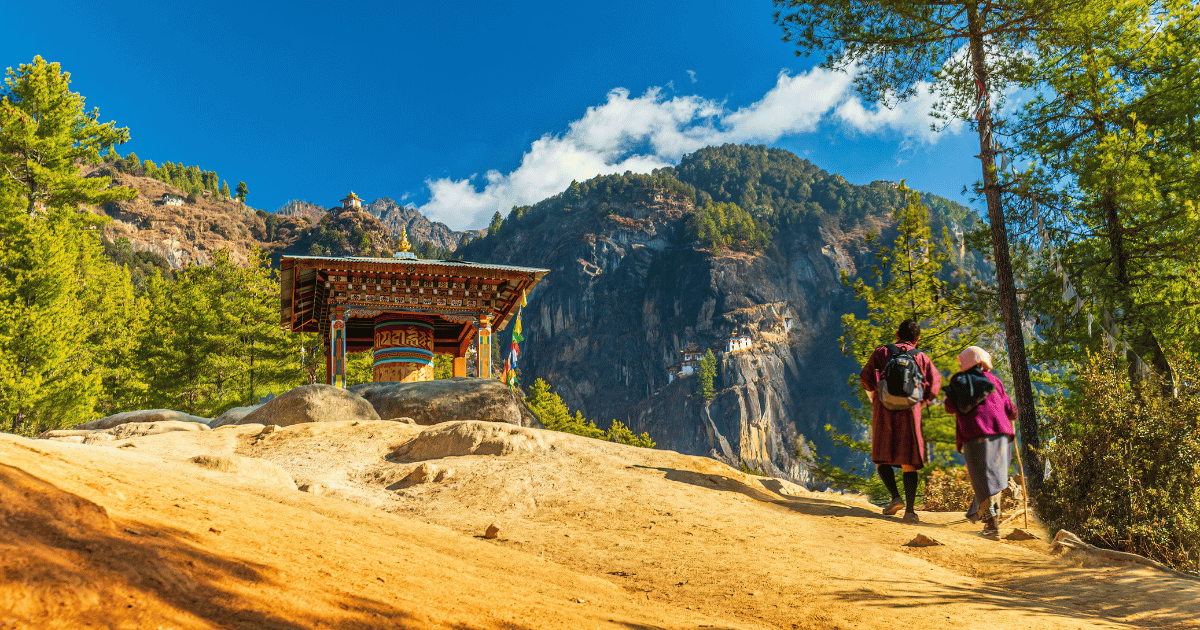
Hikers and pilgrims ascending the forested trail to Tiger’s Nest Monastery, following a steady uphill path of pine-covered slopes and stone steps toward Bhutan’s most sacred cliffside temple.
When is the best time to visit Tiger’s Nest?
The best time to visit Tiger’s Nest Monastery is during Bhutan’s spring and autumn seasons, when skies are generally clearer and temperatures are moderate for hiking. Conditions on the trail can vary significantly throughout the year, influenced by altitude and mountain weather patterns. Choosing the right season affects visibility, trail comfort and overall experience.
Spring, from March to May, brings mild temperatures and rhododendron blooms along the forested path. Autumn, from September to November, typically offers the clearest mountain views and stable conditions. Summer months can bring heavier rainfall, while winter mornings are colder and may include frost at higher elevations. Understanding seasonal differences helps ensure the hike is both comfortable and rewarding.
What is the weather like at Tiger’s Nest?
Weather at Tiger’s Nest is shaped by elevation and mountain climate. Mornings are usually cooler and clearer, making early starts preferable for hiking. In spring and autumn, daytime temperatures are generally comfortable, though conditions can change quickly.
During the summer monsoon, typically from June to August, rain showers are more frequent and the trail can become muddy or slippery. Winter, from December to February, brings crisp air and colder mornings, with occasional frost on shaded sections of the path. Layered clothing is important year round, as temperatures at 3,120 metres are noticeably cooler than in the valley below.
Is Tiger’s Nest open year round?
Tiger’s Nest Monastery is open to visitors throughout the year, although access can occasionally be affected by weather conditions or religious events. There is no fixed seasonal closure, but heavy rain or icy sections in winter may slow the hike.
Visitors must enter with a licensed guide as part of Bhutan’s regulated tourism system, and the monastery observes daily visiting hours. Modest dress is required inside the temple complex, and photography is not permitted within the shrine rooms. Planning your visit as part of a well-paced Bhutan itinerary helps ensure you arrive acclimatised and prepared for the climb.
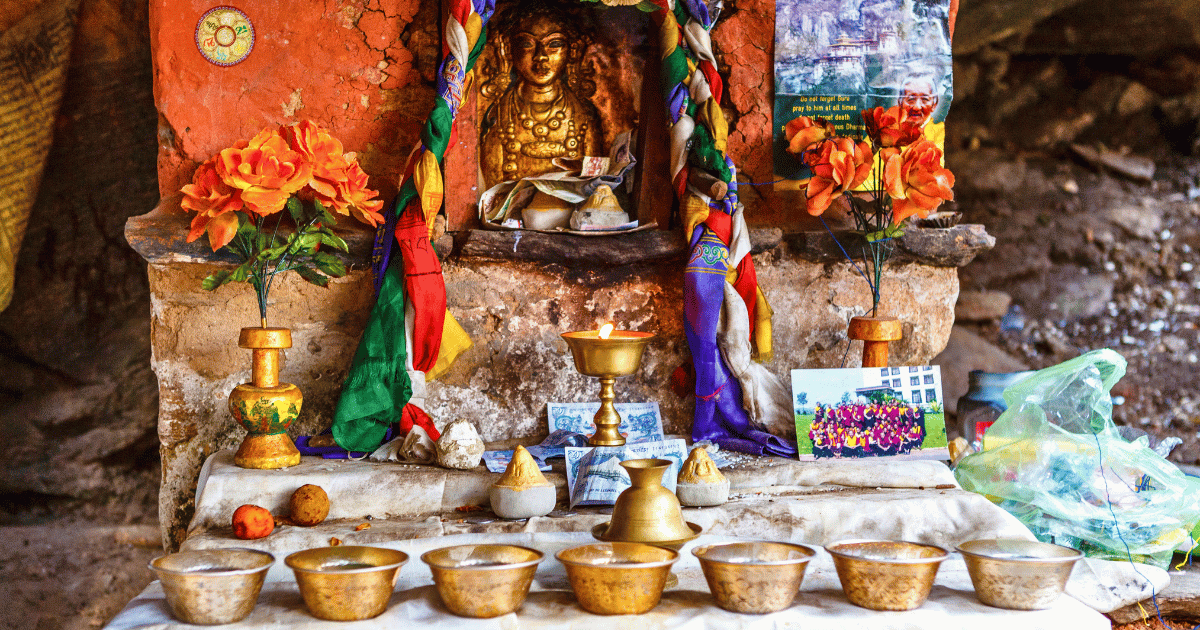
The uphill journey to Tiger’s Nest passes through pine forest dotted with small shrines and prayer flags, offering quiet moments of reflection along the steady climb toward the monastery.
What should you know before hiking to Tiger’s Nest?
The hike to Tiger’s Nest is straightforward, but preparation makes the experience more comfortable. The trail involves sustained uphill walking, variable weather and temple entry requirements once you reach the monastery complex. Starting early, carrying water and pacing yourself are simple steps that make a noticeable difference.
Visitors should also be aware that this is an active religious site, not simply a scenic viewpoint. There are checkpoints along the route, bags are screened before entering the monastery and certain items are not permitted inside. Understanding what facilities are available, how far assistance extends and what is required for temple entry helps ensure the day runs smoothly from trailhead to return.
Can you ride a horse part of the way?
Yes, horses are available at the base of the trail and can be ridden for the first section of the ascent. They typically carry visitors to the main cafeteria viewpoint, which sits roughly halfway up the route. From there, the final stretch must be completed on foot, including the stone steps descending and ascending near the monastery.
Riding a horse can reduce the physical strain of the initial climb, particularly for those concerned about fitness or altitude. However, the descent is always completed on foot, which can still be demanding on the knees.
Are there rest stops on the hike?
There are designated rest areas along the trail, including benches and shaded sections within the forest. The most significant stop is the cafeteria viewpoint, where drinks and light meals are available and where many hikers pause to take in their first clear view of the monastery across the valley.
Most travellers take regular short breaks rather than pushing continuously uphill. The path is well marked, and guides typically set a steady pace that allows for gradual acclimatisation.
What should you wear to Tiger’s Nest?
Comfortable walking shoes with good grip are essential, as parts of the trail and stone steps can be uneven or slippery. Lightweight layers are recommended, as temperatures can shift throughout the day, particularly at higher elevation.
If entering the temples, modest dress is required. Shoulders and knees should be covered, and hats must be removed before entering shrine rooms. Carrying a small daypack with water, sun protection and a light jacket is usually sufficient for the hike.
Can you enter the temples at Tiger’s Nest?
Yes, visitors are permitted to enter several of the temple rooms within the monastery complex, provided they follow local guidelines. Bags, cameras and phones must be left at the designated security area before entering. Photography is not allowed inside the shrine rooms.
The interior visit involves additional steps and short climbs between buildings built into the cliff face. Inside, the atmosphere is quiet and reverent, with monks in residence and active prayer taking place. Respectful behaviour and adherence to dress requirements are expected throughout the visit.
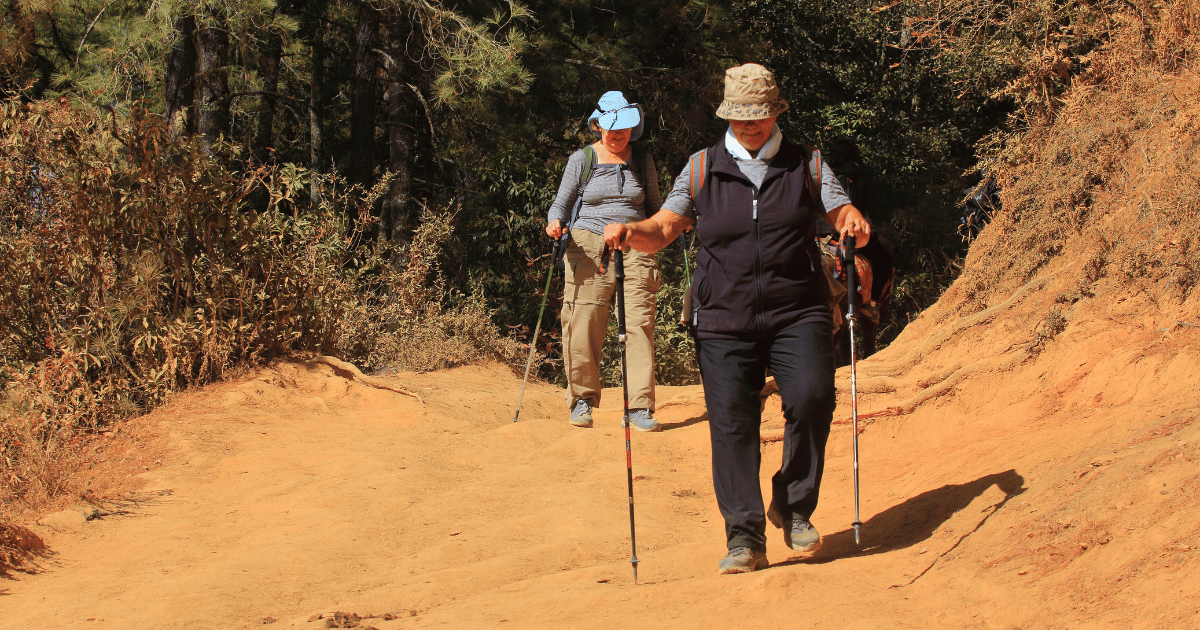
Visitors making their way up the trail to Tiger’s Nest Monastery, taking a slow and steady approach with regular breaks along the forested path. Walking poles can provide extra support on steeper sections, particularly as the incline increases closer to the monastery.
How do you get to Tiger’s Nest from Paro?
Tiger’s Nest Monastery is located above the Paro Valley, a short drive from the town centre. Most visitors reach the trailhead by private vehicle, arranged as part of a guided Bhutan itinerary. The road is paved and straightforward, passing farmland and scattered homes before arriving at the base parking area where the hike begins.
There is no public transport to the monastery itself, and independent travel is not permitted under Bhutan’s tourism regulations. Your guide will coordinate timing, permits and entry procedures, ensuring you arrive early enough to complete the hike comfortably. The journey from hotel to trailhead is brief, making it easy to schedule the hike as a half-day or full-day activity within a broader Paro stay.
How far is Tiger’s Nest from the town of Paro?
The trailhead for Tiger’s Nest is approximately 10 to 12km from Paro town, depending on your starting point. The drive typically takes around 20 minutes.
From the parking area, the monastery sits high on the cliff face above, clearly visible across the valley once you begin the ascent. Although the driving distance is short, the elevation gain begins immediately once the hike starts.
Do you need a guide to visit Tiger’s Nest?
Yes. All international visitors to Bhutan must travel on a pre-arranged itinerary through a licensed operator, which includes a local guide. Independent hiking without a guide is not permitted.
Your guide manages entry procedures, security checks and temple access, and also sets a steady pace on the trail. This structure simplifies logistics and ensures that the visit respects local regulations and religious customs. For most travellers, having a guide enhances the experience, providing cultural context along the way rather than simply navigating the route alone.
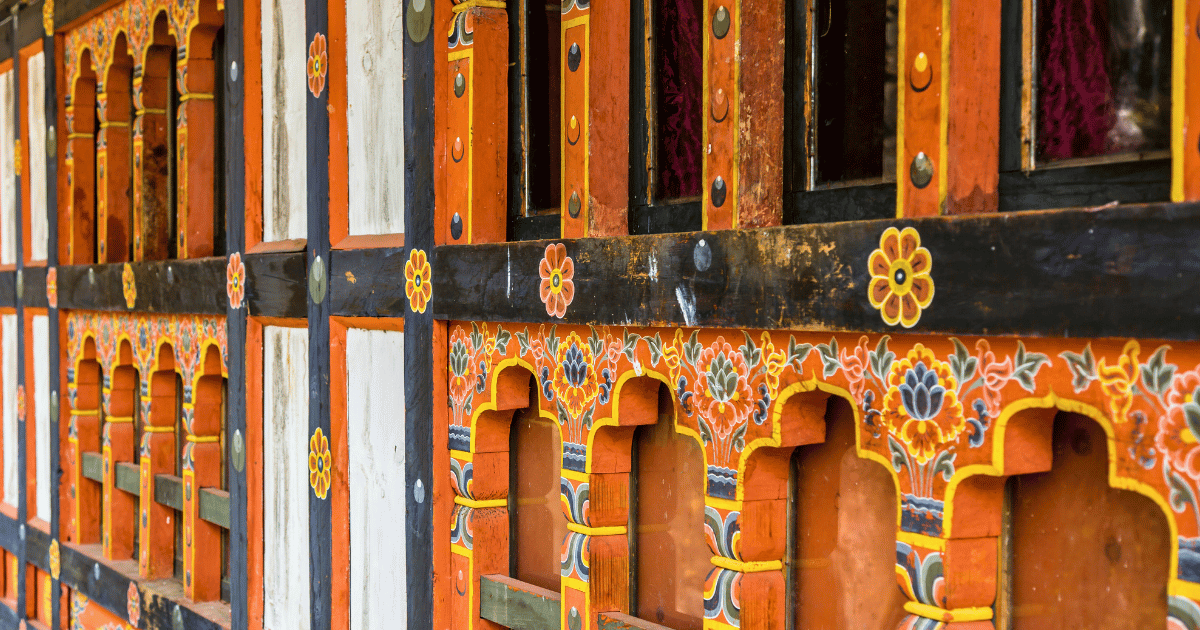
Inside Tiger’s Nest Monastery, visitors and pilgrims move quietly through candlelit shrine rooms, where active prayer continues daily. Entry is open to respectful guests, with modest dress and silence observed throughout the temple complex.
Uncover the hidden kingdom of Bhutan with Asia Unbound
At Asia Unbound, we design private journeys through Bhutan that balance cultural depth with considered pacing. From Paro and the hike to Tiger’s Nest to the valleys of Punakha and the mountain passes of Dochula, each itinerary is shaped around your interests and travel style.
Travel is seamless and fully guided, with experienced local hosts, carefully selected accommodation and well-paced days that allow time to acclimatise and absorb Bhutan’s unique rhythm. If you are considering a Bhutan tour, contact us to tailor a journey that includes Tiger’s Nest alongside the country’s wider landscapes and traditions.